

Sleep is not a passive state of inactivity; it is an active, highly orchestrated neurological process vital for cognitive survival, metabolic health, and emotional stability. Yet, millions of people worldwide lie awake at night, staring at the ceiling, trapped in the frustrating cycle of chronic insomnia.
When you cannot sleep, the mind races, cortisol levels spike, and the very act of trying to force sleep pushes it further out of reach. To overcome insomnia, we must look beyond superficial advice and explore the underlying biological mechanisms of sleep. This comprehensive guide breaks down the neurological mechanics of rest, long-term psychological strategies, and the clinical reality of medical sleep interventions.
The Biological Architecture of Sleep
Falling asleep fast requires the alignment of two primary biological systems: Process S (the sleep drive) and Process C (the circadian rhythm). When these two forces work in harmony, the transition from wakefulness to deep sleep occurs seamlessly.
Process S: Homeostatic Sleep Pressure
Sleep pressure builds up every hour you remain awake. The primary biochemical driver of this pressure is adenosine, a byproduct of cellular energy consumption in the brain. As adenosine accumulates throughout the day, it binds to specific receptors, gradually slowing down neural activity and signaling that it is time to rest. When you sleep, your brain clears this adenosine buildup, resetting the clock for the next day.
Process C: The Circadian Rhythm
Your circadian rhythm is an internal 24-hour biological clock regulated by the suprachiasmatic nucleus (SCN) in the hypothalamus. The SCN reacts directly to environmental light cues. When darkness falls, the SCN signals the pineal gland to synthesize and release melatonin, the hormone responsible for lowering core body temperature and inducing drowsiness.
Exposure to artificial blue light from screens late at night fools the SCN into believing it is still daytime, completely suppressing melatonin production and leaving the brain chemically wired when it should be winding down.
The Neurological Impact of Insomnia
When insomnia takes hold, this delicate neurological balance fractures. Chronic sleeplessness keeps the sympathetic nervous system in a state of hyperarousal. This means your body continuously secretes stress hormones like cortisol and norepinephrine, keeping your heart rate, metabolic rate, and brain temperature elevated.
Over time, this hyperarousal remodels the brain’s fear and emotional centers, making it progressively harder to drop into the slow-wave sleep cycles required for tissue repair and cognitive cleanup.
Evidence-Based Techniques to Fall Asleep Fast
If you are struggling to fall asleep, attempting to “force” your mind to quiet down rarely works. Instead, you must use proven physiological levers to trigger the parasympathetic nervous system.
1. The Military Method (Progressive Relaxation)
Developed to help pilots fall asleep under high stress conditions, this physical technique systematically shuts down bodily tension:
- Relax every muscle in your face, including your jaw, tongue, and the muscles around your eyes.
- Drop your shoulders as low as possible, followed by your upper and lower arms on one side, then the other.
- Exhale deeply, relaxing your chest.
- Relax your legs, moving from your thighs down to your calves and feet.
- Clear your mind for 10 seconds by visualizing a peaceful scene, or repeat the phrase “don’t think” rhythmically.
2. Cognitive Shuffling (Serial Diverse Imagination)
Insomnia often persists because the brain is locked in analytical, linear thinking (e.g., planning the next day or worrying about missed sleep). Cognitive shuffling disrupts this state by mimicking the chaotic, non-linear thoughts that occur naturally right before we drift off.
To practice this, choose a word (e.g., “BEDTIME”). Think of a word starting with ‘B’ (like “Banana”), visualize it clearly, then think of another ‘B’ word (“Bicycle”). Move to ‘E’ (“Elephant”, “Eagle”), and continue down the letters. This signals to the brain’s cortex that it is safe to transition into a dream state.
When chronic insomnia lasts longer than three months, it transitions from a temporary inconvenience to a clinical disorder that requires professional diagnostic intervention.
Cognitive Behavioral Therapy for Insomnia (CBT-I)
In the medical community, the undisputed first-line treatment for chronic insomnia is CBT-I. Unlike short term fixes, CBT-I addresses the underlying psychological behaviors that perpetuate sleep issues. Key components include stimulus control (re-associating the bed strictly with sleep rather than wakeful frustration) and sleep restriction (limiting time spent in bed to closely match actual sleep time, thereby supercharging homeostatic sleep pressure).
The Role of Prescription Sleep Aids
While behavioral therapies provide the most sustainable long term outcomes, acute crises or severe, refractory insomnia may lead a physician to consider medical sleep aids. These prescription medications are utilized to break the cycle of exhaustion, allowing the patient to rest while long term behavioral changes are implemented.
Among the non benzodiazepine sedative hypnotics, or “Z-drugs,” medications like Ambien (zolpidem) are frequently discussed in clinical sleep medicine.
Understanding Ambien (Zolpidem) in Sleep Therapy
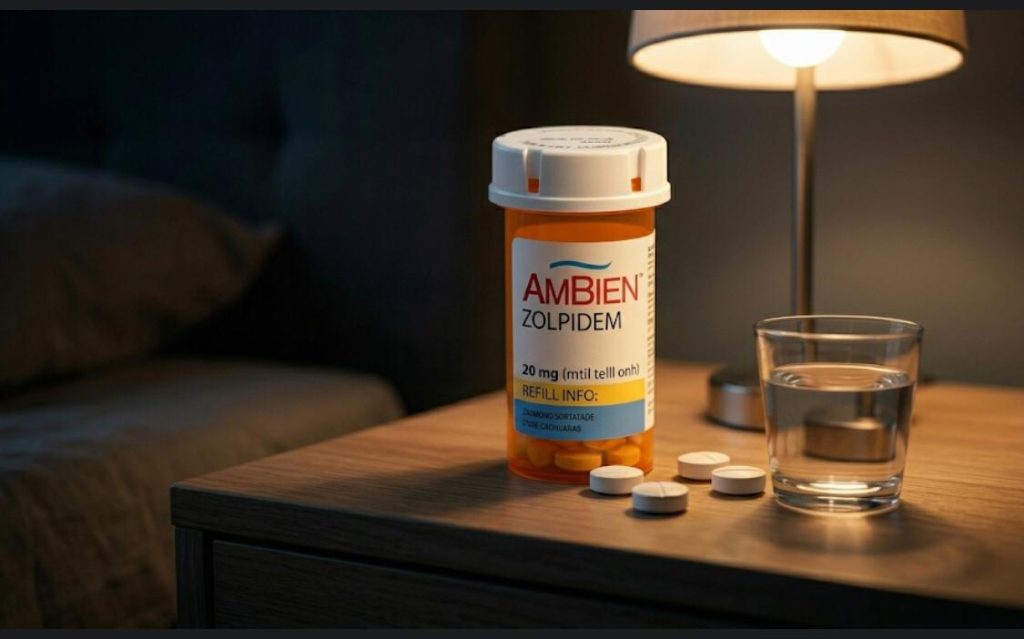
Ambien works by selectively binding to GABA-A receptors in the brain, specifically targeting the subunits responsible for sedation. By enhancing the inhibitory effects of GABA, Ambien rapidly slows down central nervous system activity, helping patients initiate sleep much faster than they would naturally.
Because of its rapid onset, physicians typically advise patients to take Ambien immediately before getting into bed, ensuring they are prepared for immediate rest.
However, because Ambien alters sleep architecture and can carry risks of psychological dependence or morning grogginess, its clinical use is strictly designed for short term management ypically spanning a few weeks. Medical professionals carefully evaluate a patient’s health profile before introducing Ambien, as misuse or sudden discontinuation can cause severe rebound insomnia, making it harder to sleep than before the treatment began.
When behavioral changes aren’t enough, medical treatments like Ambien are often considered to manage severe sleep issues. For those looking to manage their sleep cycle effectively, you can buy Ambien online through certified platforms. Before you purchase Ambien, it is essential to consult with a healthcare professional to get the right prescription and dosage. Once you have medical clearance, you can easily order Ambien from a trusted pharmacy to ensure you get a safe and genuine product. If you are ready to improve your night, you can get Ambien today and start your journey toward a restful, uninterrupted sleep
Case Study: Reclaiming Rest (A Practical Perspective)
Clinical Observation: A 34-year-old corporate executive presented with severe onset insomnia, averaging less than four hours of broken sleep per night for six months. The patient was trapped in an “anticipatory anxiety” cycle worrying all day about whether they would sleep that night, which raised their cortisol levels right at bedtime.
The Intervention Plan: The medical team initiated a two-pronged strategy. For the first ten days, a highly controlled, short-term course of sleep medication was prescribed to break the physiological cycle of panic and severe exhaustion. Concurrently, the patient began a structured 6-week CBT-I program. They removed all digital screens from the bedroom, implemented a strict 6:00 AM wake-up time regardless of sleep duration, and utilized the military relaxation method.
The Outcome: By week four, the patient’s homeostatic sleep drive had reset. The temporary prescription was successfully tapered off under medical supervision. The patient reported falling asleep within 20 minutes of hitting the pillow, demonstrating that combining temporary clinical support with permanent lifestyle restructuring is highly effective for long-term recovery.
Frequently Asked Questions (FAQ)
How long does it take for a normal adult to fall asleep?
A healthy individual with balanced sleep architecture typically takes between 10 to 20 minutes to fall asleep. This window is known as sleep latency. Taking less than 5 minutes can indicate severe sleep deprivation, while taking longer than 30 minutes regularly is a sign of insomnia.
What should I do if I am lying awake in bed for over 30 minutes
If you cannot fall asleep after 20 to 30 minutes, you should get out of bed. Go to a dimly lit room and engage in a quiet, non-stimulating activity like reading a physical book or listening to soft music. Do not look at your phone or watch the clock. Only return to bed when you feel physically sleepy. This prevents your brain from associating the mattress with frustration and anxiety.
Can I use over the counter antihistamines as a long-term sleep aid?
No. Over the counter sleep aids containing antihistamines (like diphenhydramine) are designed for occasional use only. The body develops a rapid tolerance to their sedative effects within days. Furthermore, chronic use can disrupt REM sleep quality and leave you feeling groggy, confused, and dry-mouthed the next morning.
Conclusion: Restoring Your Natural Rhythm
Overcoming insomnia is not about discovering a magical overnight trick; it is about respecting the biological rules of your body. By understanding how adenosine pressure builds and how your circadian clock responds to light, you can consciously design an environment that welcomes sleep.
Whether your path involves practicing progressive relaxation, undergoing structured CBT-I, or working with a healthcare provider to navigate medical options like Ambien safely, prioritizing your sleep is the single most powerful investment you can make in your long-term health.