What the Research Confirms in 2026
The science of bronchodilation has not changed dramatically in its core principles, but what has changed is our understanding of how to use rescue inhalers precisely, safely, and appropriately within a broader asthma management framework. In 2026, updated GINA (Global Initiative for Asthma) guidelines continue to reinforce that short-acting beta-2 agonists (SABAs) remain the cornerstone of acute symptom relief while also cautioning against over-reliance on them as a standalone strategy.
I’ve seen patients arrive in clinic convinced that their rescue inhaler was their asthma treatment plan. It isn’t. But understanding why these devices work and how powerfully and rapidly they act helps patients use them correctly, without fear, and without misuse.
Integrating Asthma Management and Dental Care
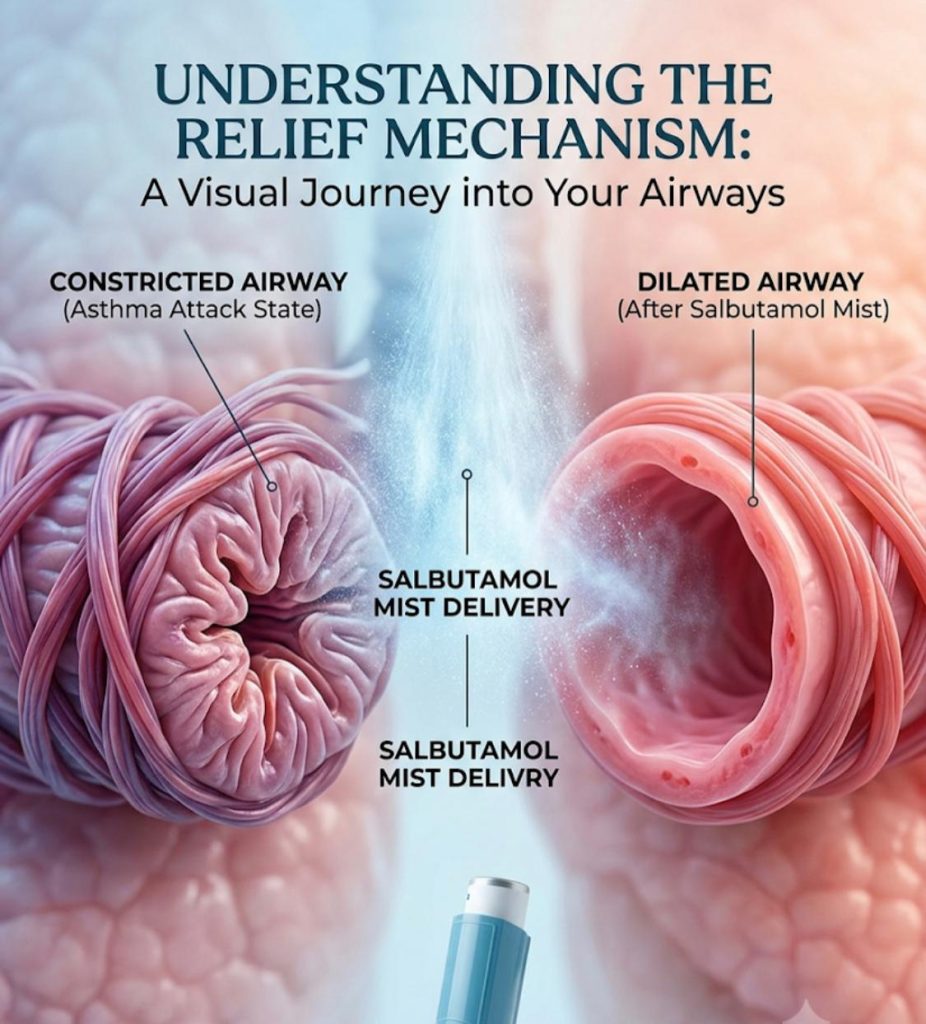
The result is a dramatically increased airway resistance. Oxygen delivery to alveoli drops. Carbon dioxide accumulates. The patient feels a terrifying, suffocating tightness in the chest.nderstanding the mechanism of quick-relief inhalers is vital in dentistry, as chronic use can reduce salivary flow, increasing a patient’s risk for dry mouth (xerostomia), tooth decay, and oral infections (like candidiasis). Dental teams must recognize these devices to effectively manage potential asthma attacks triggered during treatment. Furthermore, special considerations apply to dental and Ventolin inhaler considerations to ensure complete patient .
Why Selectivity Matters Clinically
Early bronchodilators were non selective, binding both beta-1 receptors (cardiac) and beta 2 receptors (pulmonary). This caused significant tachycardia and hypertension. Modern SABAs like albuterol (salbutamol) were developed to target beta 2 receptors with much greater affinity, making them dramatically safer for routine use particularly in patients with underlying cardiovascular comorbidities.
The Pharmacological Mechanism: Step by Step
How Albuterol Relaxes Bronchial Smooth Muscle The cAMP Signaling Cascade
When albuterol binds to a beta 2 receptor on airway smooth muscle cells, here is precisely what occurs:
- Receptor activation triggers the associated Gs protein to activate adenylyl cyclase.
- Adenylyl cyclase converts ATP into cyclic AMP (cAMP).
- Elevated intracellular cAMP activates protein kinase A (PKA).
- PKA phosphorylates myosin light-chain kinase (MLCK), effectively inactivating it.
- Without active MLCK, smooth muscle cannot maintain contraction.
- The muscle relaxes, and the airway diameter increases.
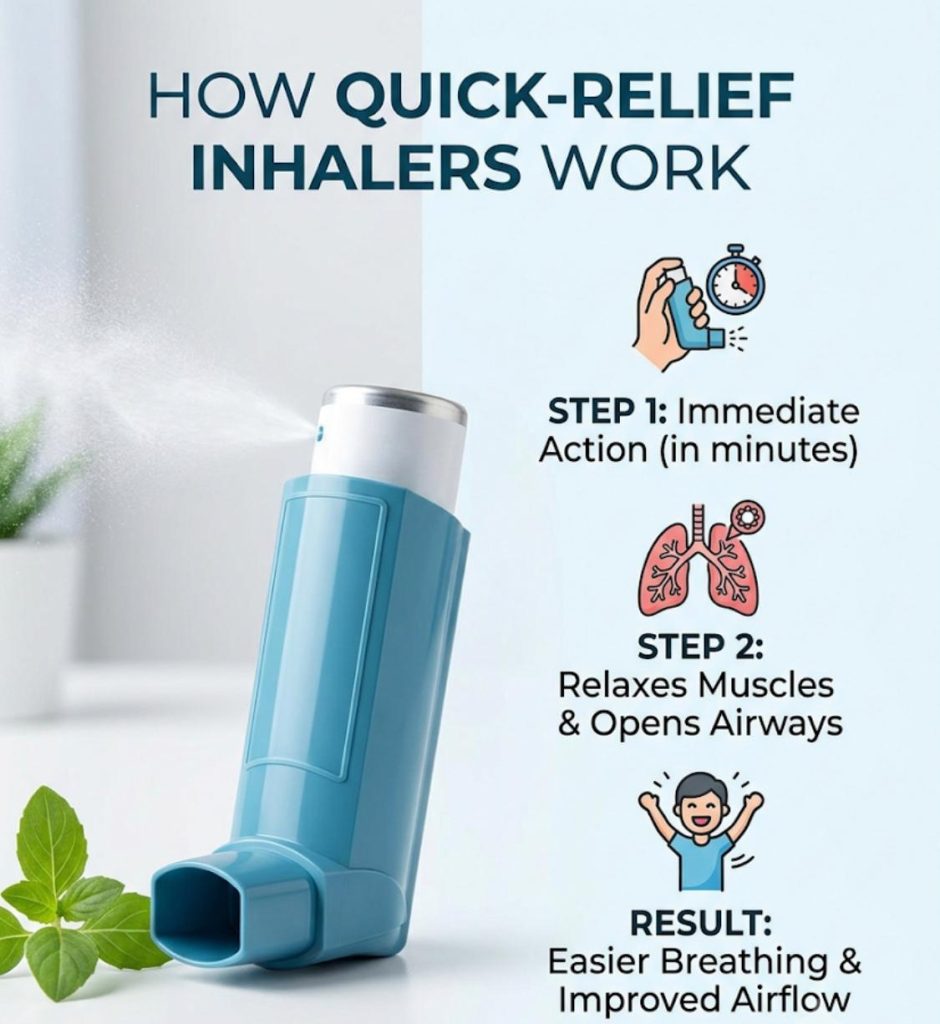
This entire cascade unfolds within 3 to 5 minutes of inhalation. In my clinical experience, I have watched patients who were moderately distressed unable to complete a full sentence achieve measurable relief within four minutes of proper albuterol administration. The speed is clinically remarkable.
Mast Cell Stabilization as a Secondary Effect
Mast cells in the airway mucosa release histamine, leukotrienes, and other pro-inflammatory mediators that perpetuate the attack.
Mucociliary Clearance Enhancement
An often overlooked benefit: beta 2 agonist stimulation increases ciliary beat frequency and improves mucociliary transport. Patients often notice they can cough more productively within 10–15 minutes of using their rescue inhaler.
Inhaler Delivery Systems: Not All Devices Are Equal
Metered-Dose Inhalers (MDIs)
The pressurized metered-dose inhaler (pMDI) remains the most widely prescribed rescue inhaler format globally. A canister of propellant-suspended medication delivers a precise, measured dose with each actuation. The critical limitation is technique dependency studies consistently show that up to 70% of patients use pMDIs incorrectly, resulting in substantially reduced pulmonary drug deposition.
Proper technique requires coordinated inhalation with actuation, a slow deep breath, and a 10-second breath-hold. I routinely spend 5–7 minutes during appointments demonstrating technique, because the difference in symptom control between correct and incorrect use is clinically measurable.
The Spacer Advantage
A valved holding chamber (spacer) attached to an MDI eliminates the coordination requirement, slows the aerosol, reduces oropharyngeal deposition, and increases pulmonary delivery by 20–40%. For children, elderly patients, and anyone who struggles with breath-actuation coordination, a spacer is not optional it is standard of care.
Dry Powder Inhalers (DPIs)
DPIs dispense medication as a fine dry powder triggered by the patient’s own inspiratory effort. They require no propellant and no coordination, but they do demand a sufficiently forceful and rapid inhalation to de-aggregate the powder particles. For patients in severe exacerbation, where inspiratory flow rates are significantly reduced, DPI delivery can be inconsistent.Always rinse your mouth with water after using an inhaler to protect your oral health.
Nebulizers in Acute Settings
In emergency departments and hospital settings, nebulized albuterol administered via a face mask or mouthpiece over 5–15 minutes delivers continuous medication regardless of atient effort or coordination. This is the preferred route in severe exacerbation, status asthmaticus, and pediatric acute care.
Comparative Overview: Rescue Inhaler Formats
| Device Type | Onset of Action | Technique Required | Best Suited For | Limitations |
|---|---|---|---|---|
| pMDI (no spacer) | 3–5 minutes | High (coordinated) | Adults with trained technique | High error rate in untrained users |
| pMDI + Spacer | 3–5 minutes | Low | Children, elderly, acute settings | Spacer adds bulk/portability issue |
| Dry Powder Inhaler | 3–5 minutes | Moderate (strong inhalation) | Adults, mild-moderate severity | Ineffective in severe dyspnea |
| Nebulizer | 5–10 minutes | None | Severe exacerbation, hospitals | Not portable, time-consuming |
| Soft Mist Inhaler | 3–5 minutes | Low-moderate | Elderly, COPD patients | Higher cost |
Ventolin: The Clinical and Practical Gold Standard
Accessing Ventolin Safely in 2026
Ventolin (albuterol/salbutamol 90 mcg per actuation) is unequivocally the most prescribed and most clinically validated rescue inhaler on the global market. It is the reference standard against which other SABAs are compared in clinical trials. In my practice, Ventolin accounts for the majority of rescue inhaler prescriptions I write its reliability, consistency of dose delivery, and decades-long safety record make it the logical first choice.
For patients managing chronic asthma or reactive airway disease, maintaining an adequate supply is not merely a convenience it is a medical safety imperative. Running out of a rescue inhaler has genuine life-threatening potential. Patients who need to buy Ventolin online should do so exclusively through licensed, verified pharmacy platforms that require a valid prescription. This is non-negotiable from a safety standpoint.
When patients ask me about the most responsible way to order Ventolin online between in person pharmacy visits, I emphasize three criteria: the pharmacy must require a current prescription from a licensed provider it must be verifiable through state board of pharmacy databases or NABP (National Association of Boards of Pharmacy) accreditation; and medication must arrive in manufacturer-sealed, labeled packaging. Patients looking to acquire Ventolin inhaler through discount channels without these safeguards risk receiving counterfeit, expired, or improperly stored albuterol which may fail at the exact moment it is most critically needed.
For those who wish to buy Ventolin with maximum safety, many NABP-accredited online pharmacies now offer telehealth-integrated services where a licensed physician reviews your diagnosis and, if appropriate, authorizes the prescription directly. This pathway allows patients to secure a reliable supply without sacrificing medical oversight. The ability to purchase Ventolin inhaler conveniently should never come at the cost of pharmaceutical integrity. Always confirm accreditation before completing any online transaction.
Common Mistakes That Reduce Rescue Inhaler Effectiveness
Technique Errors With Measurable Consequences
| Error | Consequence | Correction |
|---|---|---|
| Actuating before inhaling | Drug deposits in mouth, not lungs | Coordinate actuation with the start of inhalation |
| Inhaling too fast | Turbulent flow, large particle impaction in throat | Slow, steady 3–5 second inhalation |
| Not shaking MDI | Inconsistent drug/propellant ratio | Shake 5–10 seconds before each use |
| Skipping breath-hold | Reduced alveolar deposition | Hold breath 10 seconds after inhalation |
| Using expired inhaler | Subtherapeutic dosing | Check date; replace per manufacturer guidance |
| Not tracking doses | Using empty canister in emergency | Use dose counter; replace at designated threshold |
Overuse as a Warning Sign, Not a Solution
Using a rescue inhaler more than twice per week for symptom relief (outside of exercise-induced bronchospasm) is a clinical red flag it signals inadequately controlled underlying inflammation. I’ve had patients who were using their rescue inhaler six to eight times daily for months, interpreting it as effective control. It was not control; it was escalating disease masked by symptomatic suppression.
Current GINA 2025/2026 guidelines recommend that patients exceeding twice-weekly SABA use be stepped up to or have their existing controller therapy optimized, not simply refilled with additional rescue medication.
Special Populations: Adjusted Considerations
Pediatric Patients
Children under age 4 should use an MDI with spacer and face mask. Older children (4–6 years) can transition to a mouthpiece spacer. DPIs are generally not recommended before age 6–7 due to inadequate inspiratory flow. In my pediatric asthma patients, parental education about spacer maintenance specifically, electrostatic charge reduction by washing the spacer with liquid detergent makes a measurable difference in drug delivery.
Elderly and COPD Patients
Older adults often have reduced hand grip strength and cognitive processing speed, making MDI coordination difficult. Soft mist inhalers (e.g., Respimat) and breath-actuated devices are preferable. Additionally, elderly patients on beta-blockers for cardiac conditions should be counseled that non-selective beta-blockers may blunt the bronchodilatory response of albuterol a potentially dangerous drug interaction that requires physician-level management.
Pregnant Patients
Albuterol is classified as Category C historically, and while the 2026 evidence base continues to support its use in pregnancy when the benefit outweighs risk, the key message is this: untreated asthma exacerbation poses far greater risk to the fetus (via maternal hypoxia) than appropriately used rescue bronchodilator therapy. In my experience managing pregnant asthmatic patients, the clinical priority is always maintaining maternal oxygenation.
When a Rescue Inhaler Is Not Enough
Recognizing the Limits of Bronchodilation
Rescue inhalers reverse bronchospasm. They do not resolve airway inflammation, reduce eosinophil infiltration, suppress mucus production long-term, or prevent future attacks. A patient experiencing:
- No improvement after 2–3 puffs over 20 minutes
- Worsening oxygen saturation
- Inability to speak in full sentences
- Cyanosis or altered consciousness
…requires immediate emergency care. Calling 911 is the appropriate action. I make this explicit at every asthma management appointment: the rescue inhaler is your first response, not your last resort. Knowing when to escalate is as clinically important as knowing how to actuate the device.
Frequently Asked Questions (FAQ)
Q1: How quickly does a rescue inhaler start working after I use it?
A rescue inhaler typically begins working within 3 to 5 minutes of inhalation, with peak bronchodilation occurring between 15 and 30 minutes. If you do not notice any improvement within 20 minutes of using 2–4 puffs, seek emergency medical attention immediately rather than continuing to repeat doses without reassessment.
Q2: Can I use my rescue inhaler every day without any risk?
Daily rescue inhaler use is not recommended as a long-term strategy and carries real risks. Frequent SABA use (more than 3 canisters per year) is independently associated with increased asthma mortality risk in population studies. If you are using your rescue inhaler daily, this signals that your underlying asthma is not adequately controlled and your treatment regimen should be reviewed by a physician.
Q3: Where is the safest place to buy Ventolin online in 2026, and what should I look for?
The safest way to purchase Ventolin online in 2026 is through pharmacies verified by the National Association of Boards of Pharmacy (NABP) via their “.pharmacy” accreditation program.
Q4: Is there a difference between albuterol and salbutamol?
Albuterol and salbutamol are the same active molecule they differ only in naming convention. “Albuterol” is the approved United States Adopted Name (USAN), while “salbutamol” is the International Nonproprietary Name (INN) used in most other countries including the UK, Canada, and Australia. Ventolin, the brand name, contains salbutamol/albuterol at 90 mcg per actuation in its MDI formulation.
Q5: Can a rescue inhaler be used before exercise to prevent bronchospasm?
Yes using 2 puffs of albuterol 15 to 30 minutes before anticipated exercise is a well-established, guideline-supported strategy for preventing exercise-induced bronchospasm (EIB).
Authoritative Sources and References
- Global Initiative for Asthma (GINA). Global Strategy for Asthma Management and Prevention, 2025 Update. GINA Report. Available at: www.ginasthma.org
- National Heart, Lung, and Blood Institute (NHLBI). National Asthma Education and Prevention Program (NAEPP) Expert Panel Report-3: Guidelines for the Diagnosis and Management of Asthma. US Department of Health and Human Services, 2007 (updated 2020). Available via PubMed: PMID 17983880.
- Barnes, P.J. “Beta-adrenergic receptors and their regulation.” American Journal of Respiratory and Critical Care Medicine. 1995;152(3):838–860. DOI: 10.1164/ajrccm.152.3.7663795
- World Health Organization (WHO). Asthma Fact Sheet. Updated May 2023. Available at: www.who.int/news-room/fact-sheets/detail/asthma
- Pleasants, R.A., Hess, D.R. “Aerosol delivery devices for obstructive lung diseases.” Respiratory Care. 2018;63(6):708–733. DOI: 10.4187/respcare.06290
- Mayo Clinic Staff. “Albuterol (Inhalation Route) Proper Use.” Mayo Clinic Drug Information. Updated 2024. Availab