
Prepared for Abraham Dental Art readers. This is a patient education draft, not a verified clinical record. Case observations below are labeled composites. A Florida licensed dentist or physician should review prescribing guidance before publication.
Antibiotic Use in Dental Practice 2026
In the best dental laboratory I see the downstream consequences of antibiotic decisions before most clinicians do. Abraham Dental Art sits at the junction where clinical prescribing, laboratory fabrication, and patient outcomes meet. That vantage point has changed how I think about antibiotics. They are extraordinary drugs and among the most misused in outpatient medicine.
Why the Conversation Has Changed
U.S. outpatient antibiotic prescribing has declined somewhat from its peak, but dental prescribing remains a meaningful contributor to overall antibiotic volume. More importantly, the guiding principle has shifted from “treat aggressively” to “treat precisely.” Shorter courses, narrower spectra, and clearer evidence thresholds now define good practice across specialties, including dentistry.
Antibiotics target structures or processes that bacteria possess and human cells do not. That selectivity is why they can be used at all. Having examined the broader epidemiological shifts in systemic health, like those seen in conditions such as Erectile Dysfunction we now transition to the practical management and specific precautions required in dental practice for patients with these and other chronic, complex conditions.
Cell Wall Inhibitors
Beta lactams penicillins, amoxicillins, cephalosporins bind penicillin binding proteins and prevent peptidoglycan cross linking. Without a functional wall, bacteria lyse under osmotic pressure. Because human cells lack peptidoglycan, this class has a favorable safety margin and remains foundational in dentistry.
Protein Synthesis Inhibitors

Macrolides such as azithromycin bind the bacterial 50S ribosomal subunit and block translocation during protein synthesis. Tetracyclines such as doxycycline bind the 30S subunit. Clindamycin binds the 50S subunit at a different site. These agents are useful for patients with true beta lactam allergy, though each carries its own risk profile.
DNA and Folate Pathway Inhibitors
Fluoroquinolones inhibit DNA gyrase and topoisomerase IV. Sulfonamides block bacterial folate synthesis. Metronidazole disrupts DNA in anaerobic organisms. Each class has specific niches and specific harms fluoroquinolones, for example, carry boxed warnings for tendon rupture and aortic complications and are not first line for routine dental infections.
The Source Control Principle
A necrotic pulp, a periodontal abscess, or a periapical lesion requires pulpectomy, incision and drainage, extraction, or periodontal therapy. Antibiotics reduce bacterial load but cannot sterilize an infected root canal or drain a collection. Prescribing alone and deferring the procedure is the most common error I encounter in the restorative chain by the time the patient reaches the laboratory for a prosthesis, the underlying problem has often progressed.
The 2019 ADA Guideline
The American Dental Association’s 2019 evidence based guideline on antibiotic use for urgent management of pulpal and periapical related dental pain and intraoral swelling remains the reference point. Its central conclusion: for immunocompetent adults with localized infection and no systemic involvement.
Systemic Signs That Change the Calculation
Antibiotics enter the picture when infection has spread beyond the local site:
- Fever
- Malaise or fatigue out of proportion to the dental complaint
- Lymphadenopathy
- Facial cellulitis with spreading erythema
- Trismus, indicating involvement of masticatory spaces
- Rapidly worsening swelling over hours
Absolute Emergencies
Ludwig’s angina, with bilateral submandibular swelling, elevation of the floor of the mouth, and airway compromise, is a surgical emergency requiring immediate hospital transfer. A dental office should never attempt outpatient management. Difficulty swallowing or breathing, voice change, or stridor are red flags warranting 911 activation.
Antibiotic Prophylaxis in 2026
Current recommendations restrict prophylaxis to the highest-risk cardiac patients:
- Prosthetic heart valves, including transcatheter-implanted valves
- Prior infective endocarditis
- Certain congenital heart conditions (unrepaired cyanotic disease, repaired lesions within the past six months, repaired lesions with residual defects)
- Cardiac transplant recipients who develop valvulopathy
Who No Longer Qualifies Routinely
Prosthetic joint prophylaxis has been substantially narrowed. The 2015 ADA consensus concluded there is insufficient evidence to recommend routine prophylaxis for patients with prosthetic joints, though clinical judgment remains in the discussion. Routine prophylaxis for most other conditions, including hemodialysis, has also been reassessed.
Confirming Rather Than Assuming
Because guidelines have changed substantially, and because patients often present with instructions given years earlier by another clinician, the dental team should confirm current recommendations with the patient’s cardiologist or orthopedic surgeon rather than act on historical paperwork. In my experience, an unverified “prophylaxis required” note in a chart is a common source of unnecessary prescriptions.
Antibiotic Resistance in Dental Practice
Every exposure selects for organisms that survive it. Resistance spreads through horizontal gene transfer via plasmids. The dental setting contributes through unnecessary prescriptions, excessively broad agents, and courses that extend beyond clinical need.
Specific Concerns in Dentistry
- Oral anaerobes increasingly demonstrate beta lactamase production
- Macrolide resistance among Streptococcus species has risen in many regions
- Fluoroquinolone resistance has accelerated, prompting calls for restriction in outpatient use
What Practices Can Do
Practical stewardship steps I’ve seen improve outcomes in dentally complex cases:
- Prescribe only with a defined diagnosis. Document the specific indication.
- Use the narrowest effective agent. Amoxicillin remains appropriate for many odontogenic infections; reserve macrolides for documented beta-lactam allergy.
- Limit duration. Shorter courses increasingly suffice; there is no reason to prescribe seven days for an infection resolving in two.
- Drain first, then prescribe. Source control remains the definitive intervention.
- Reassess. If the patient is not improving after 48 to 72 hours, the diagnosis or drainage adequacy may be wrong not the antibiotic dose.
Understanding Zithromax (Azithromycin) in Dental Care

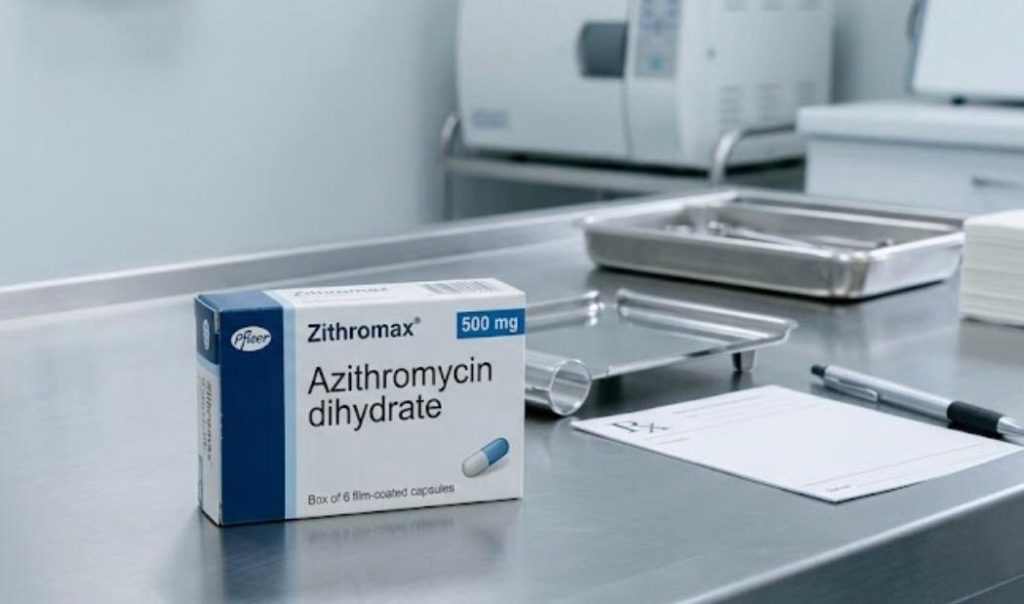
Zithromax is the brand name for Azithromycin, a macrolide with a long tissue half life that permits short course dosing. Its clinical utility in dentistry derives from its activity against several respiratory and oral organisms and its convenience often a five day or three day regimen. It is not a first line medication products for odontogenic infections, and its role has narrowed as macrolide resistance has expanded.
Indications Where It Appears
Azithromycin is typically used in dental contexts only for patients with a documented beta lactam allergy, some anaerobic periodontal applications, or specific prophylaxis scenarios in consultation with the patient’s medical team. Routine substitution of Azithromycin for amoxicillin is not recommended.
Side Effects and Interactions
Common adverse effects include gastrointestinal upset, abdominal pain, and nausea. Serious risks include:
- QT interval prolongation, which can precipitate dangerous arrhythmias, particularly in combination with other QT-prolonging drugs (some antifungals, certain antidepressants, ondansetron)
- Hepatotoxicity, rare but real
- Hearing loss, typically with prolonged high-dose use
- Myasthenia gravis exacerbation
Interactions requiring review: antacids (reduce absorption), warfarin (bleeding risk elevation), digoxin (toxicity risk), and other QT-prolonging agents.
Warning Signs to Counsel On
Patients should be told to report palpitations, fainting, yellowing of the eyes or skin, or unusual fatigue. These are uncommon but clinically meaningful.
Safe Access: Prescription Requirements and Pharmacy Verification
Azithromycin is a prescription only medication in the United States. It is not a controlled substance, but that does not mean it is safe to self source. Patients searching “buy Zithromax online,” “purchase Zithromax,” “buy prescription Zithromax,” or “order Zithromax” need to recognize that the only legitimate pathway requires a clinical diagnosis from a licensed prescriber, a valid prescription, and a pharmacy that verifies it. In my work adjacent to abdominal and dental surgical planning, I have seen patients buy generic Zithromax online and receive a package of that medication.
Legitimate vs. Illegitimate Signalling
Legitimate online pharmacies in the U.S. visibly require prescription verification with the prescriber, list a physical address and pharmacist phone number, and show accreditation through NABP’s .pharmacy program. Illegitimate sellers offer “no prescription needed” dispensing, hide physical addresses, use offshore shipping without customs clarity, and price the drug well below market. The FDA’s BeSafeRx resource details how to evaluate any pharmacy before ordering.
What Prescribers Should Counsel
When a dental patient is prescribed Zithromax, they should be told: what infection it is treating, how long to take it, what side effects to watch for, and what to do if they miss a dose. They should also be told none of that changes if they fill it at a chain pharmacy, a local independent, or a legitimate online pharmacy the key is the pharmacy’s licensure and prescription verification process.
A composite patient let’s call her a 47 year old woman presents with a maxillary molar that has been symptomatic for two weeks. She was prescribed a seven-day course of azithromycin by an urgent care clinic without drainage. By the time she reaches Abraham Dental Art’s laboratory pathway after extraction and implant placement, the socket has been delayed in healing, and the buccal plate shows evidence of chronic inflammation. The prosthesis planning shifts from immediate placement to a staged approach with a longer healing window.
This is not a hypothetical failure of antibiotics. It is a failure of the sequencing that should have preceded them: drainage first, then if systemic signs are present antibiotics as an adjunct. The composite illustrates why dental laboratories care about prescribing patterns in the offices that refer to them.
Coordinating With Prescribers
When we fabricate complex restorations, particularly implant-supported prostheses in patients with diabetes, immunosuppression, or prior endocarditis, we sometimes see case notes that reveal antibiotic decisions made months earlier. The laboratory does not prescribe. But we communicate with referring clinicians when patterns suggest recurrent infection or infection that did not resolve with prior courses. This coordination reduces surprises at the surgical stage.
Special Populations
Older Adults
Older adults present with more polypharmacy, more kidney dysfunction, and higher risk of C. difficile after antibiotics. Macrolides carry QT risk that becomes more relevant with age and concurrent medications.
Pregnancy
Penicillins and cephalosporins are generally preferred in pregnancy. Macrolides are used with caution; clarithromycin is avoided in the first trimester. Any antibiotic decision in pregnancy should involve the obstetric clinician.
Immunocompromised Patients
Patients receiving chemotherapy, on biologics, or post transplant require a lower threshold for antibiotics and often broader coverage.
A Practical Patient Education Framework
When a dental practice prescribes an antibiotic, the conversation should include:
- What we are treating and why
- Why this specific drug and dose
- How long to take it and what to do if a dose is missed
- Side effects that warrant a call
- How to take it (with food, spacing from antacids or calcium)
- What to do about dental treatment timing around the course
- The importance of completing the prescribed course
- Where to safely fill the prescription
This education takes three minutes and prevents most avoidable complications.
Frequently Asked Questions
Do I always need antibiotics for a tooth infection?
No, most localized dental infections are resolved by removing the source through drainage, root canal therapy, or extraction, with antibiotics reserved for cases showing systemic signs of infection.
Is Zithromax as effective as amoxicillin for a dental infection?
Azithromycin is generally not first-line for odontogenic infections and is typically reserved for patients with documented beta-lactam allergy or specific clinical circumstances, because macrolide resistance has increased and efficacy is not equivalent.
What should I do if I think I have a penicillin allergy?
Ask your clinician about formal allergy evaluation, because more than ninety percent of reported penicillin allergies are not confirmed when tested, and delabeling enables safer, narrower-spectrum antibiotic use.
Where can I safely buy prescription Zithromax online?
You can only safely buy prescription Zithromax online through a state licensed pharmacy that requires a valid prescription, provides pharmacist access, and is verifiable through your state board of pharmacy or the NABP .pharmacy program.
When should a dental infection be treated as an emergency?
A dental infection is an emergency when it causes difficulty breathing or swallowing, swelling that spreads rapidly, fever with facial swelling, or voice change, because these signs may indicate airway threatening spread requiring immediate hospital care.