Healthcare SEO in 2026: What Has Changed?
Healthcare search has entered a period in which publishing accurate information is only one part of achieving online visibility.
Dental laboratories, health blogs, and online pharmacies must now consider how their websites appear in traditional Google results, AI-generated answers, specialized search experiences, and professional research workflows.
A dental technician searching for zirconia restoration protocols may encounter an AI-generated summary before visiting a manufacturer’s website. A patient researching antidepressant side effects may receive information assembled from medical institutions, government resources, and healthcare publications.
Meanwhile, a dentist comparing dental laboratories may rely on conventional search results, professional recommendations, image searches, and technical documentation.
These journeys create different opportunities for search engine optimization.
Effective healthcare SEO in 2026 combines clinical accuracy, technical accessibility, professional credibility, and content that answers specific questions.
Google’s AI Overviews and AI Mode make this especially relevant. Websites should provide information that search systems can interpret accurately and that readers can independently verify.
However, no optimization method guarantees inclusion in an AI-generated answer.
Why Medical Websites Face Higher Standards
Healthcare content can influence decisions involving treatment, medication, diagnosis, and personal safety.
Google describes subjects with significant potential to affect health, financial stability, or safety as Your Money or Your Life (YMYL) topics.
Examples include:
- Dental implant treatment and prosthetic restoration.
- Prescription antidepressant use.
- Medication interactions and contraindications.
- Dental laboratory materials and biocompatibility.
- Online medication purchasing.
- Patient education concerning oral diseases.
Google’s Search Quality Rater Guidelines use the concept of E-E-A-T: Experience, Expertise, Authoritativeness, and Trustworthiness.
E-E-A-T is not a single, independently measurable ranking factor. Instead, it describes qualities that help assess content quality, particularly when inaccurate information could cause harm.
For medical websites, trust is central.
The Difference Between SEO, AIO, and GEO
Traditional search engine optimization focuses on making pages accessible, relevant, and competitive in search results.
AI Overview optimization, often called AIO, concentrates on creating information that search systems can understand and potentially reference in AI-generated responses.
Generative Engine Optimization (GEO) addresses discoverability across generative search experiences.
These approaches overlap considerably.
| Optimization method | Primary objective | Healthcare application |
|---|---|---|
| Traditional SEO | Improve organic search visibility | Dental laboratory service pages |
| AIO | Support visibility in AI-generated search answers | Concise medical explanations |
| GEO | Improve discoverability across generative search platforms | Evidence-based clinical resources |
| Local SEO | Improve geographic discoverability | Dental laboratories serving regional clinics |
| Technical SEO | Support crawling, indexing, and usability | Medical websites and pharmacy catalogs |
A practical strategy combines these approaches rather than treating them as separate marketing channels.
Dental Laboratory SEO: Building Professional Authority
Dental laboratories occupy a specialized position within healthcare marketing.
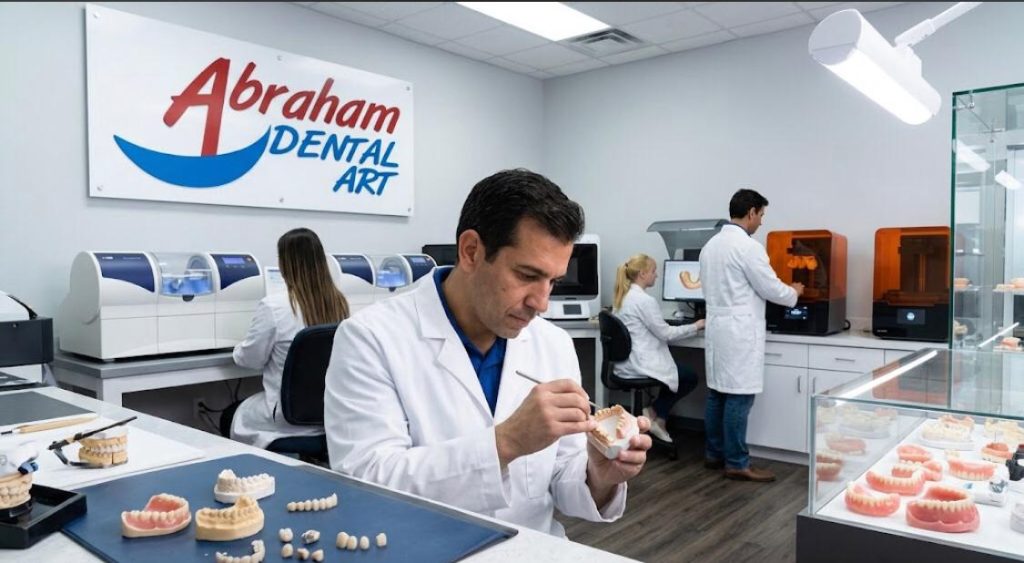
Unlike dental clinics, laboratories frequently serve dental professionals rather than patients directly. Their SEO strategies should reflect that business model.
For Dental Laboratory in Florida, the relevant editorial approach is to explain laboratory capabilities through clinically meaningful subjects: restoration materials, digital workflows, communication with dentists, and prosthetic manufacturing.
The goal is not simply to attract traffic. It is to attract dentists and dental practices seeking a suitable laboratory partner.
Identifying High-Value Dental Laboratory Keywords
Dental laboratory keyword research should distinguish informational searches from commercial searches.
A dentist researching zirconia properties has a different intention from someone searching for a laboratory accepting new cases.
Commercial search terms may include:
- Dental laboratory services.
- Digital dental laboratory.
- Custom zirconia restorations.
- Dental crown fabrication laboratory.
- Implant-supported prosthetics laboratory.
- CAD/CAM dental laboratory services.
- Dental laboratory for dentists.
Informational queries may address restoration longevity, material selection, digital impressions, or communication between dental practices and laboratories.
Both categories matter.
Educational resources can establish topical relevance, while service pages explain how dentists can request laboratory work.
Creating Service Pages That Answer Clinical Questions
A useful dental laboratory service page should explain more than the name of a product.
Digital Impression and CAD/CAM Workflows
Digital dentistry provides another opportunity for specialized content.
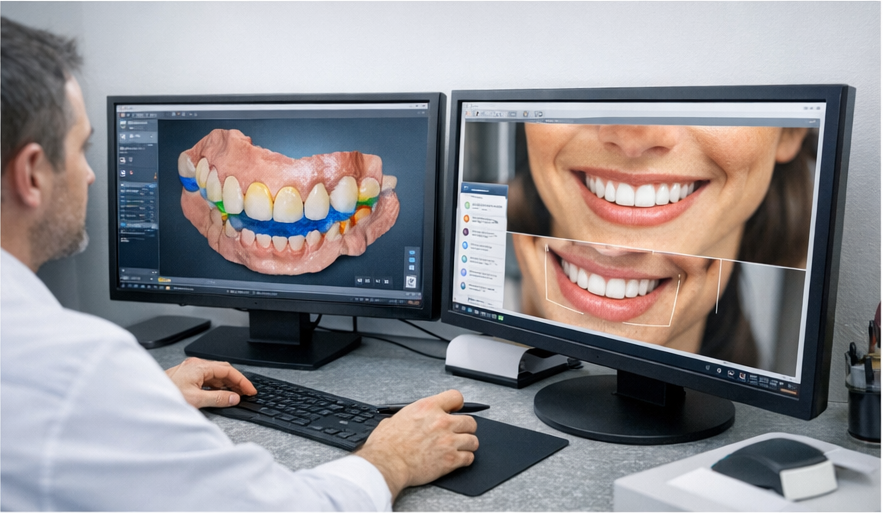
A laboratory website can explain how intraoral scans enter a computer-aided design and computer-aided manufacturing workflow.
Scan Quality and Restoration Accuracy
An incomplete preparation margin or missing interproximal detail may complicate restoration design.
For example, consider an illustrative case in which a dental practice submits an incomplete intraoral scan for a posterior crown.
The laboratory identifies insufficient margin detail and requests a revised scan before manufacturing.
This workflow example demonstrates why communication and quality control matter more than producing a restoration as quickly as possible.
It should not be presented as a documented Abraham Dental case without confirmation.
Manufacturing and Quality Verification
Content can also describe milling, sintering, finishing, and inspection procedures.
Useful documentation may include material specifications, restoration design requirements, quality-control procedures, and instructions for communicating case specific concerns.
The laboratory should publish only procedures it actually follows.
This distinction protects professional credibility and helps prevent marketing language from creating misleading expectations.
Experience Based Content Without Invented Cases
Firsthand professional experience can distinguish a dental laboratory from medical blog in Florida. However, experience signals must be genuine.
Abraham Dental Art Dental Laboratory could strengthen its website through verified technician interviews, authorized photographs of manufacturing processes, and documented examples of laboratory dentist collaboration.
A clinically useful case study might explain why a material was selected, what manufacturing challenges occurred, and how the laboratory addressed them.
Patient information should be removed or used only with appropriate authorization. Authentic documentation is more valuable than an impressive but unverifiable success story.
Medical Blog SEO: Accuracy Before Traffic
Medical blogs compete in an environment where readers expect clear answers supported by trustworthy evidence.
A successful healthcare article must communicate medical information without exaggerabenefits, minimizing risks, or confusing educational material with personalized medical advice.
Building Medical Topic Clusters

A topic cluster connects a broad subject with related, more specific articles. For example, a dental health publication could create a central resource about dental restorations.
Supporting articles might cover zirconia crowns, ceramic materials, digital impressions, prosthetic maintenance, and common restoration complications.
These pages can link to one another where the connection genuinely helps readers. The same approach works for health blogs covering depression, hypertension, diabetes, or preventive care.
Internal linking helps visitors discover related information and gives search engines clearer context about the website’s structure.
Using Authoritative Medical Sources
Healthcare articles should distinguish established findings from preliminary research.
Strong reference sources include government health agencies, peer-reviewed journals, professional medical organizations, and recognized clinical guidelines.
For example, the National Institute of Dental and Craniofacial Research provides educational resources concerning oral health conditions.
The National Institutes of Health and National Library of Medicine offer access to biomedical information and research literature.
Medication articles can reference FDA-approved prescribing information and relevant clinical guidance.
Publication Dates and Medical Review
A visible publication date tells readers when the article first appeared.
A separate review date can indicate when its medical claims were last checked.
These dates should represent actual editorial activity.
Changing a date without materially reviewing content does not make an article more accurate.
Medical articles should also identify their authors, qualifications, reviewers, and editorial policies where appropriate.
Writing for AI Generated Medical Answers
Medical content should answer the reader’s question near the beginning of the relevant section.
It also makes the answer easier for search systems to identify.
Google does not require special AI-specific markup or a particular paragraph format for eligibility in its AI search features.
Clear organization is useful, but clarity should not be confused with a guaranteed citation.
Online Pharmacy SEO and Pharmaceutical Trust
Online pharmacy optimization requires a different level of commercial and regulatory care.
Unlike a general healthcare blog, an online pharmacy in Florida may directly facilitate transactions involving prescription medications. That introduces patient safety, privacy, advertising, and regulatory considerations.
Why Pharmacy Verification Matters

A pharmacy website should clearly identify the business responsible for dispensing medication.
For US-facing pharmacies, important trust signals include appropriate state licensing, legitimate prescription requirements, accessible pharmacist support, transparent contact information, and secure handling of patient data.
The FDA warns consumers about unsafe online pharmacies that sell prescription drugs without valid prescriptions or operate outside applicable safeguards.
The National Association of Boards of Pharmacy also provides resources for identifying pharmacies that meet relevant verification standards.
A website ranking highly in Google is not proof that the pharmacy is licensed or safe.
An online pharmacy should not imply that these products are interchangeable. A responsible pharmacy page can explain which prescription medications it dispenses, whether delivery is available in the patient’s jurisdiction, how prescriptions are verified, and how customers can contact a pharmacist.
An accredited or otherwise appropriately verified online pharmacy should provide accurate medication information without portraying access to prescription drugs as an unrestricted consumer purchase.
Comparing Pharmacy Website Approaches
Pharmacy operators must also consider applicable advertising policies, including Google Ads requirements when running paid pharmaceutical advertising.
Organic search eligibility does not eliminate legal or platform-specific obligations.
Technical SEO Denver Digital Agency and Google Indexing in 2026
Good medical content may remain difficult to discover when a website has crawling, indexing, or structural problems.
Technical SEO helps search engines access and understand pages. It does not override poor-quality content or guarantee rankings.
Crawlability and Indexing Controls
Healthcare websites should maintain accessible navigation and consistent internal links. Important pages should return successful HTTP responses and avoid accidental noindex directives. Feel free to contact us today for a professional consultation and expert digital marketing solutions.
XML sitemaps can help search engines discover preferred URLs. Google Search Console provides information about indexing, search performance, and certain technical issues. A practical technical review should examine canonical URLs, redirects, duplicate pages, mobile usability, and server errors.
Canonicalization for Pharmacy Product Pages
Online pharmacies may have several URLs representing closely related products or variations. Poor URL management can produce unnecessary duplication.
Canonical tags help communicate preferred URLs, although Google may select a different canonical when its systems identify conflicting signals. Prescription medication pages should also comply with applicable laws and search platform policies.
The Role of Denver Digital SEO Agency in Technical Implementation

In 2026, technical SEO is defined by how effectively a website can be crawled by AI agents. This is where the expertise of Denver Digital SEO Agency becomes indispensable. Standard SEO practices from the past such as the basic use of meta tags are now merely the bare minimum. SEO Agency Denver Digital focuses on “semantic engineering”: creating a site architecture that mirrors the medical taxonomies used by the U.S. National Library of Medicine (NLM).
By implementing advanced Schema.org markup specifically types such as MedicalWebPage, TechSpec, and Physician Denver Digital SEO Agency ensures that search engines can instantly verify the credentials of content authors. This “Technical Trust” allows a dental laboratory or medical blog to stand out amidst the general information noise and ensures rapid indexing.
Health blogs have evolved from simple news feeds into repositories of data rooted in actual clinical experience. The 2026 Google Quality Rater Guidelines place special emphasis on the “Experience” component of the E-E-A-T framework. It is no longer sufficient for a physician to simply review a publication; the material must reflect genuine clinical observation. Explore our exclusive digital offers and advanced technological solutions designed to elevate your business growth.
Documenting Clinical Successes and Failures
At the dental laboratory Abraham Dental Art Laboratory, we have shifted our blogging strategy to include “retrospective clinical case analyses.” For example, instead of writing a general article about digital impressions, we published a review of 500 clinical cases that compared the marginal fit accuracy achieved using intraoral scanners versus traditional polyvinyl siloxane (PVS) impressions. This unique data provides “Information Gain” the most powerful tool for combating content obsolescence in 2026.
Core Web Vitals and Mobile Usability
Google’s Core Web Vitals assess aspects of real-world user experience.
The current core metrics include:
- Largest Contentful Paint (LCP): loading performance.
- Interaction to Next Paint (INP): responsiveness.
- Cumulative Layout Shift (CLS): visual stability.
Google’s recommended good thresholds are LCP of 2.5 seconds or less, INP of 200 milliseconds or less, and CLS of 0.1 or less, assessed at the 75th percentile. Medical websites often include large images, interactive interfaces, and external scripts.
These features should be implemented without unnecessarily reducing usability. Performance improvements support visitors, although good Core Web Vitals alone do not establish medical expertise or ensure strong rankings.
GEO Strategies for Medical and Dental Content
Generative search systems create new opportunities for specialized healthcare publishers.
A technical resource explaining dental restoration materials may be useful to readers and potentially relevant to AI-generated research summaries. However, search systems may choose to reference different sources depending on the query.
Use Clear Medical Entity Relationships
Medical writing becomes more useful when terminology is precise. For example, an article discussing dental implants should distinguish the implant fixture, abutment, and prosthetic restoration.
Likewise, antidepressant content should distinguish medication classes, individual active ingredients, and approved indications. These distinctions improve clinical accuracy while making relationships between concepts easier to understand.
Connect Claims to Evidence
A medical website should identify the sources supporting major clinical claims. Statements about treatment effectiveness, adverse effects, or safety require stronger sourcing than ordinary marketing descriptions.
For dental laboratories, manufacturer instructions and relevant peer-reviewed research can support technical discussions.
For pharmacy websites, approved prescribing information is especially relevant. Sources should be checked for currency and relevance rather than added simply to make an article appear authoritative.
Publish Original Professional Information
Original material can make a specialist website more useful than a collection of rewritten summaries.
For Abraham Dental Laboratory, suitable content could include verified workflow photographs, technician-authored explanations, equipment information, and documented quality control processes.
Local SEO and Professional Lead Generation: Dental laboratories often depend on regional relationships with dentists and dental practices. Local SEO can support discovery when the laboratory has an eligible business presence.
Google Business Profile Optimization
An eligible dental laboratory should maintain accurate business details, including its name, address, operating hours, and contact information. The chosen business category should reflect the actual operation.
Professional photographs and current website links can help potential customers evaluate the business. Reviews should represent genuine customer experiences. Businesses should not purchase fabricated reviews or offer incentives conditional on positive ratings.
Location Pages and Service Areas
A laboratory serving multiple locations can explain its geographic coverage. However, creating numerous nearly identical city pages without meaningful local information may produce low-value content.
A useful location page should explain actual service availability, communication methods, relevant shipping arrangements, and practical details for dental practices.For online pharmacies, geographic targeting must also reflect the jurisdictions where the business is legally authorized to dispense medications.
Measuring Healthcare SEO Performance
SEO reporting should evaluate business outcomes alongside search visibility. A dental laboratory may receive fewer website visits than a general health publisher while generating more valuable professional inquiries.
Similarly, pharmacy traffic should be assessed in the context of lawful prescription fulfillment and patient service.
Useful Performance Indicators
Relevant measurements include organic search impressions, clicks, qualified inquiries, appointment or consultation requests, and engagement with important educational content.
Dental laboratories can track inquiries from dental professionals, case submission requests, and contacts related to specific services.
Medical blogs can examine readership, navigation to related resources, and the performance of medically reviewed content.
Online pharmacies can measure compliant customer acquisition and prescription fulfillment activity while respecting applicable privacy requirements.
Monitoring AI Search Visibility
Google Search Console provides search performance information, but it does not offer a universal, standalone report covering every AI-generated citation across platforms.
Third-party visibility tools may estimate how frequently a brand appears in AI responses. Those estimates should be treated as directional information rather than definitive measurements.
A useful monitoring process combines ordinary search analytics with periodic reviews of important informational queries.
Updating Content Based on Real Changes
Healthcare content should be reviewed when new guidelines, regulatory updates, safety communications, or meaningful research findings affect its accuracy. For instance, a medication page should be revised when relevant FDA safety information changes.
A dental materials article may require an update when new manufacturer instructions or strong clinical evidence alter accepted recommendations. A genuine review is more valuable than repeatedly changing publication dates
Practical SEO Priorities for Healthcare Brands
Dental laboratories, medical blogs, and online pharmacies share the need for credible information, but their commercial objectives differ.
Dental laboratory websites should prioritize professional service descriptions, technical expertise, and verified laboratory experience.
Health blogs should prioritize accurate explanations, qualified authorship, relevant sources, and clear distinctions between education and individualized care.
Online pharmacies must combine product discoverability with lawful dispensing practices, transparent licensing, medication safety, and responsible commercial claims.
Across all three sectors, strong technical foundations help search engines discover content, while useful editorial material gives visitors a reason to trust the website.
For Abraham Dental Art, the most defensible long-term strategy is to make genuine professional expertise visible through accurate technical explanations, documented procedures, and relevant educational resources.In 2026, healthcare SEO should be measured by more than rankings. The better question is whether the website provides reliable information that helps the right audience make an informed decision.
Frequently Asked Questions
What is the best SEO strategy for dental laboratories in 2026?
The best dental laboratory SEO strategy combines technically sound service pages, authentic professional expertise, relevant educational content, and local visibility where applicable.
Laboratories should explain their actual services, materials, manufacturing capabilities, and communication processes. Google Search Console can help identify indexing problems and evaluate organic search performance.
How can medical blogs improve visibility in Google AI Overviews?
Medical blogs can improve their eligibility for discovery by publishing accurate, accessible, well-structured information supported by authoritative sources.
Clear answers, descriptive headings, qualified authorship, and useful internal links help readers and search systems interpret content. No technique guarantees an AI Overview citation.
Can patients safely buy antidepressants online from a verified pharmacy?
Yes, patients can obtain prescribed antidepressants from legitimate online pharmacies that comply with applicable licensing, prescription, and dispensing requirements.
Before placing an order, consumers should verify pharmacy credentials and confirm that a valid prescription is required. Medication changes should be discussed with the prescribing clinician.
Why does E-E-A-T matter for healthcare SEO?
E-E-A-T matters because healthcare websites address subjects where inaccurate information can affect patient health and safety.
Experience, expertise, authoritativeness, and trustworthiness help describe the qualities of reliable content. Google does not treat E-E-A-T as one standalone ranking score.
How can professional SEO services help dental labs and online pharmacies?
Professional SEO services for dental labs and online pharmacies can improve technical accessibility, content organization, search visibility, and the measurement of qualified traffic.
Effective providers should understand healthcare-specific requirements, including accurate medical claims, professional credentials, prescription regulations, and advertising restrictions. No reputable provider can guarantee first-place rankings or inclusion in AI-generated answers.