
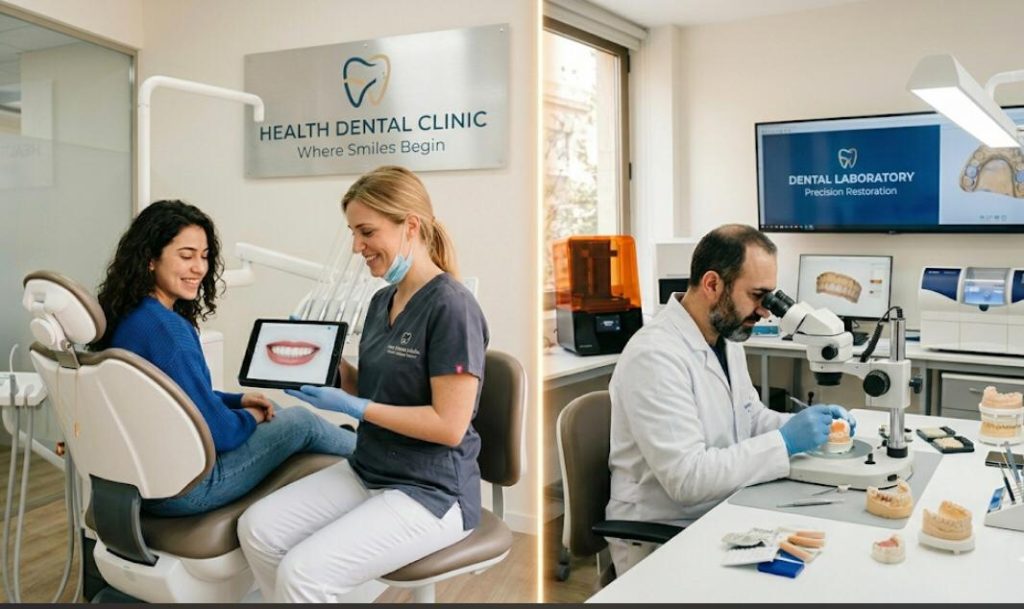
Holistic dental health is the clinical discipline that treats the oral cavity not as an isolated anatomical region, but as a dynamic biological interface connected to systemic physiology, immune function, microbiome ecology, and patient-specific biochemistry with dental laboratory science serving as the diagnostic and restorative backbone that makes precision, patient-centered care quantifiably possible.
That definition matters because, for too long, “holistic dentistry” got reduced to mercury-free fillings and herbal mouth rinses. In my practice, the deeper transformation came when I stopped viewing the dental laboratory as a passive fabrication vendor and started treating it as an active clinical partner. The shift changed outcomes measurably and consistently.
What follows is an expert-level examination of how integrating laboratory excellence from biocompatible materials science to salivary diagnostics, microbiome mapping, and AI-assisted prosthetic design redefines what comprehensive dental care looks like in 2026.
Why the Dental Laboratory Is the Missing Link in Systemic Oral Health
For most of the twentieth century, the relationship between a dentist and a dental laboratory technician was transactional. A case went out in a bag; a crown came back in a box. There was minimal clinical dialogue, minimal material transparency, and virtually no consideration of how a restoration’s chemistry interacted with the patient’s broader biology.
I remember early in my career receiving a full-arch zirconia case for a patient with documented autoimmune sensitivities. Nobody at the lab had been told. The restoration came back beautifully milled, and within six months the patient was back in my chair with persistent mucosal inflammation. That case taught me more about integrated communication than any continuing education course.
The problem wasn’t the lab’s craftsmanship it was the absence of a shared clinical language.
The Oral-Systemic Connection: What the Science Confirms
The bidirectional relationship between periodontal disease and systemic conditions is now well-established in peer-reviewed literature
Chronic periodontal inflammation has documented associations with:
-Cardiovascular disease particularly atherosclerosis and elevated CRP markers
-Type 2 diabetes with periodontal pathogens worsening glycemic control
-Adverse pregnancy outcomes including preterm birth and low birth weight
-Rheumatoid arthritis sharing inflammatory cytokine pathways
– Alzheimer’s disease via Porphyromonas gingivalis neuroinvasion pathways identified in recent research
When a dental laboratory produces a poorly fitting restoration that creates a plaque trap or occlusal trauma, it doesn’t just cause local discomfort. It seeds a chronic inflammatory burden that ripples outward into the patient’s systemic health. This is why lab excellence isn’t cosmetic it’s genuinely medical.
Biocompatible Materials: The Foundation of Lab-Integrated Holistic Care
Moving Beyond “Metal-Free” as a Marketing Claim
In 2026, the conversation about biocompatibility has grown significantly more sophisticated than the simple metal-free versus metal binary. True biocompatibility assessment requires understanding:
-Galvanic potential between dissimilar metals in multi-unit cases
-Ion leaching profiles of specific zirconia and ceramic formulations under thermal cycling
-Resin monomer residuals in CAD/CAM polymer blocks and their estrogenic activity potential
-Cement chemistry and its interaction with dentin tubule biology
Zirconia: Not All Grades Are Equivalent
Dental zirconia exists across multiple generations from the original 3-mol% yttria-stabilized tetragonal zirconia polycrystal (3Y-TZP) to the newer 5Y and 6Y high-translucency formulations. Each grade has distinct mechanical and biological profiles. High-translucency zirconia (5Y and above) offers superior esthetics but slightly lower fracture toughness. For a patient with bruxism and systemic inflammation, the material choice carries real clinical consequence.
I routinely send a detailed patient profile to my laboratory including documented sensitivities, parafunctional habits, salivary pH data, and systemic medications before a single case is designed. My lab partners have told me repeatedly this makes them better technicians because they understand *why* they’re making specific fabrication decisions.
Pressed and Milled Ceramics: Thermal Compatibility Matters
 One area clinicians underestimate is coefficient of thermal expansion (CTE) matching between core ceramics and veneering porcelains. A CTE mismatch even within “acceptable” ranges creates micro-tensile stress at the interface. Over years of thermal cycling (eating and drinking), this produces delamination. For patients with xerostomia or acid reflux who already have compromised enamel, a delaminating restoration accelerates the damage.
The laboratory’s ability to select compatible material pairings and to advise the clinician accordingly is a form of preventive care.
Diagnostic Laboratory Integration: Salivary and Microbiome Testing in 2026
Saliva as a Diagnostic Fluid AI Overview Panel Salivary Diagnostics in Dentistry:
Salivary diagnostics in 2026 represent a validated, non-invasive platform for detecting biomarkers associated with oral cancer, periodontal disease activity, caries risk stratification, systemic inflammatory markers (including IL-6 and TNF-α), and HPV status. Commercial salivary testing panels integrated with dental practice workflows now provide actionable chairside data within 20-40 minutes, enabling same-appointment treatment planning adjustments.
Saliva is extraordinary biological material. It carries immunoglobulins, cytokines, hormones, microbial DNA, and genomic fragments from epithelial cells. The clinical utility of salivary testing has expanded dramatically, and the dental office with its frequent patient contact intervals s arguably better positioned than many primary care settings to leverage this.
In my practice, we implemented salivary caries risk testing several years ago. The impact on patient engagement was immediate. When a patient sees their own Streptococcus mutans and Lactobacillus counts on a printed report, the abstract concept of “caries risk” becomes viscerally real. Compliance with preventive protocols improves substantially.
Oral Microbiome Mapping
The oral microbiome contains over 700 identified bacterial species. High-throughput 16S rRNA sequencing once confined to academic research is now commercially accessible and increasingly integrated into periodontal treatment planning.
Laboratories specializing in oral microbiome analysis can now provide:
-Dysbiosis scoring measuring the ratio of health-associated to pathogen-associated species
-Antibiotic sensitivity guidance identifying which targeted antibiotics will be effective for a specific patient’s bacterial profile, avoiding systemic over-prescription
-Recolonization tracking monitoring microbial shifts post-treatment to confirm therapeutic success
I’ve used microbiome data to determine that a patient presenting with persistent periodontal pockets despite excellent hygiene and three prior scaling appointments had a Treponema denticola dominant biofilm that wasn’t responding to conventional mechanical debridement alone. The lab data redirected the treatment toward localized antiseptic irrigation combined with a specific probiotic protocol. Within four months, pocket depths normalized.
That case would not have resolved as cleanly without laboratory science informing the clinical decision.
Digital Lab Workflows and AI-Assisted Design: Precision That Serves Patients
The CAD/CAM Revolution Matures
Computer-aided design and manufacturing in dental laboratories is not new. What is new in 2026 is the sophistication of the AI algorithms embedded within design software algorithms trained on millions of occlusal datasets, emergence profiles, and functional load analyses.
AI Overview Panel AI in Dental Lab Design:
AI-assisted CAD/CAM dental laboratory systems in 2026 use machine learning models trained on large clinical datasets to auto-propose restoration morphology, occlusal contacts, and interproximal contours. These systems integrate directly with intraoral scan data and can flag potential bite discrepancies before a restoration is ever milled, reducing remakes by up to 60% in practices using full digital workflows (per 2024–2025 industry benchmarking data).
The practical implication for patient care is that restorations are more anatomically accurate, better adapted to functional forces, and less likely to require adjustment which means less post-placement trauma to the periodontium and pulp.
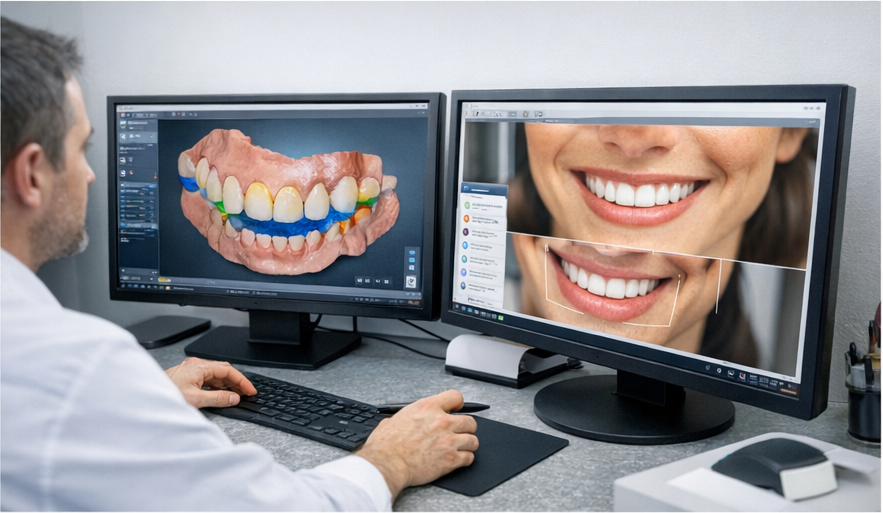
Digital Smile Design as a Diagnostic Tool (Not Just Cosmetics)
Digital Smile Design (DSD) often marketed as purely esthetic carries genuine diagnostic value. By overlaying the patient’s facial proportions, lip dynamics, and phonetic function onto a digital treatment plan, the laboratory can identify:
– Vertical dimension discrepancies that contribute to TMD symptoms
– Midline deviations that may reflect skeletal asymmetries requiring orthopedic assessment
– Incisal edge position errors that affect speech and swallowing mechanics
When a patient came to me with chronic headaches, clicking joints, and a history of multiple failed restorations, a DSD analysis revealed her entire occlusal plane had been progressively reconstructed at a closed vertical dimension. The lab’s digital overlay made this visible in a patient-facing presentation that her previous providers had never produced. Correcting the vertical dimension through a carefully sequenced laboratory-guided restoration plan resolved the TMD symptoms within eighteen months.
3D Printing in Dental Laboratories
Polymer jet and photopolymerization-based 3D printing has enabled dental laboratories to produce:
– Surgical guides for implant placement with sub-millimeter accuracy
– Interim restorations that precisely anticipate final prosthetic outcomes
– Occlusal splints customized to digitally recorded bite registrations
– Anatomical models for patient education and pre-surgical simulation
The accuracy of modern dental 3D printing particularly multi-material systems that can replicate the optical properties of enamel and dentin simultaneously has closed the gap between interim and definitive restorations in ways that benefit treatment planning enormously.
Sleep, Airway, and the Laboratory’s Role in Appliance-Based Therapy
Mandibular Advancement Devices: Precision Is Non-Negotiable
Obstructive sleep apnea affects an estimated 936 million adults globally. Dentists are increasingly front-line providers for mild-to-moderate OSA management through mandibular advancement device (MAD) therapy. The laboratory’s role in fabricating these devices is medically significant not ancillary.
A poorly fitting or poorly calibrated MAD creates:
– Irreversible occlusal changes from sustained mandibular repositioning
– TMJ stress from inaccurately recorded bite registrations
– Patient non-compliance that leaves the underlying apnea untreated
In 2026, the best dental laboratories fabricating sleep appliances are working with digital bite registration data, cone-beam CT airway analysis overlays, and titration-ready adjustment mechanisms that allow precise incremental advancement without remakes.
I now co-manage sleep patients with both a sleep physician and my laboratory technician in a three-way communication loop. Case outcomes are measurably better AHI reductions are greater, occlusal side effects are lower, and patients are more consistently compliant.
Pediatric Airway Development: Functional Appliances and Lab Design
 The emerging science of pediatric airway development has highlighted the role of oral appliances in guiding maxillary expansion and mandibular growth during critical developmental windows. Functional appliances Biobloc, ALF, myofunctional devices require laboratory fabrication of exceptional accuracy.
A 0.5mm discrepancy in a pediatric expansion appliance is not trivial. In a growing child’s palate, it can mean the difference between symmetric arch development and creating a transverse cant. Laboratories specializing in functional appliances understand skeletal growth vectors and work from cephalometric data, not just impressions.
Making the Invisible Visible
One of the most powerful things I’ve learned in clinical practice is that patients don’t trust what they can’t see or understand. Dental laboratory science is almost entirely invisible to patients they have no idea what happens between the impression and the restoration.
Changing that has transformed my practice’s relationship with patients. I now routinely:
– Show patients their digital scan and the proposed restoration design before fabrication
– Explain material choices in accessible language and why we chose a specific ceramic for their case
– Share salivary diagnostic results and microbiome reports as educational moments
– Provide physical material samples so patients can feel the difference between different ceramic grades
When patients understand that their crown isn’t just shaped to fit it’s been designed by a team using AI, fabricated from a material selected specifically for their biology, and checked against their functional loading patterns they value the care differently. They’re more compliant. They keep their recall appointments. They refer family members.
Infection Control, Material Stewardship, and Ethical Lab Sourcing
The Provenance Problem in Dental Materials
Not all dental materials sold in the United States are manufactured under equivalent quality standards. Offshore-manufactured ceramics and zirconia discs with mislabeled composition claims remain a documented concern. In 2026, responsible practices are:
– Requesting ISO and FDA documentation for all materials used in laboratory-fabricated restorations
– Working with laboratories that disclose full material sourcing chains
– Avoiding the lowest-bid laboratory model when it compromises material traceability
I had a patient transfer to my practice with a failing “zirconia” bridge that, when examined, had surface characteristics inconsistent with properly sintered zirconia. We couldn’t get material documentation from the previous provider’s laboratory. This is a patient safety issue, not just a quality concern.
Cross-Contamination Protocols Between Chair and Lab
The physical transit of dental cases between the operatory and the laboratory is an infection control gap that doesn’t receive enough attention. In my practice, all cases are decontaminated with an FDA-cleared disinfectant spray and sealed in antimicrobial bags before dispatch. All returning cases from the laboratory are treated as potentially contaminated surfaces until cleaned chairside.
Laboratories certified under ISO 13485 medical device quality management standards are operating within a framework that addresses this another reason lab certification matters.
FAQ:
Q: What does “holistic dental health” mean in the context of laboratory science?
Holistic dental health in a laboratory context means that every restorative and diagnostic decision is made with the patient’s entire biology in mind including systemic health, material biocompatibility, microbiome status, and functional anatomy rather than treating the tooth as an isolated structure.
Q: How do I know if my dentist is using a high-quality dental laboratory?
Ask your dentist directly what laboratory fabricates your restorations, whether that lab holds ISO 13485 certification or an equivalent quality standard, what materials are used in your specific case, and whether the lab is domestic or offshore. A confident, detailed answer is a sign of a genuinely integrated practice.
Q: Can salivary diagnostics really change my dental treatment plan?
Yes, measurably. Salivary testing for caries risk, periodontal pathogen profiles, and oral cancer biomarkers provides data that can shift treatment from reactive to genuinely preventive sometimes catching problems years before they become clinically visible.
Q: Are you looking for a holistic dentist who uses advanced lab integration for restorations, implants, and sleep appliances in 2026?
Patients seeking comprehensive, lab-integrated holistic dental care in 2026 should look for practices that combine digital workflow technology, biocompatible material selection, salivary diagnostics, and collaborative laboratory partnerships all coordinated through a transparent, patient-centered treatment philosophy. Board-certified dentists with post-graduate training in restorative science, sleep medicine, or orofacial pain are typically best positioned to offer this level of integration.
Q: How does AI-assisted dental lab design benefit patients compared to traditional methods?
AI-assisted design reduces human error in occlusal morphology, improves the anatomical accuracy of restorations, and flags potential fitting issues before fabrication begins reducing the number of appointments needed for adjustments and lowering trauma to surrounding tissues from ill-fitting restorations.
Authoritative Sources
1.Tonetti MS, Jepsen S, Jin L, Otomo-Corgel J. “Impact of the global burden of periodontal diseases on health, nutrition and wellbeing of mankind: A call for global action.” Journal of Clinical Periodontology. 2017;44(5):456-462. [PubMed PMID: 28419559]
2.Hajishengallis G, Chavakis T. “Local and systemic mechanisms linking periodontal disease and inflammatory comorbidities.” Nature Reviews Immunology. 2021;21(7):426-440. [PubMed PMID: 33542493]
3.Dominy SS, Lynch C, Ermini F, et al. “Porphyromonas gingivalis in Alzheimer’s disease brains: Evidence for disease causation and treatment with small-molecule inhibitors.” Science Advances.2019;5(1):eaau3333. [PubMed PMID: 30756018]
4.World Health Organization.Global Oral Health Status Report: Towards Universal Health Coverage for Oral Health by 2030. Geneva: WHO; 2022. Available at: who.int/publications/i/item/9789240061484
5. Rekow ED. “Digital dentistry: The new state of the art – Is it disruptive or destructive?” Dental Materials.2020;36(1):9-24. [PubMed PMID: 31706595]
6. Lobbezoo F, Ahlberg J, Raphael KG, et al.”International consensus on the assessment of bruxism: Report of a work in progress.” Journal of Oral Rehabilitation. 2018;45(11):837-844. [PubMed PMID: 3004338
Pingback: Modern Dentistry Meets Pharmaceutical Innovation 2026 - Abraham Dental Art