2026 Clinical Perspectives on NSAID Therapy and Mucosal Integrity
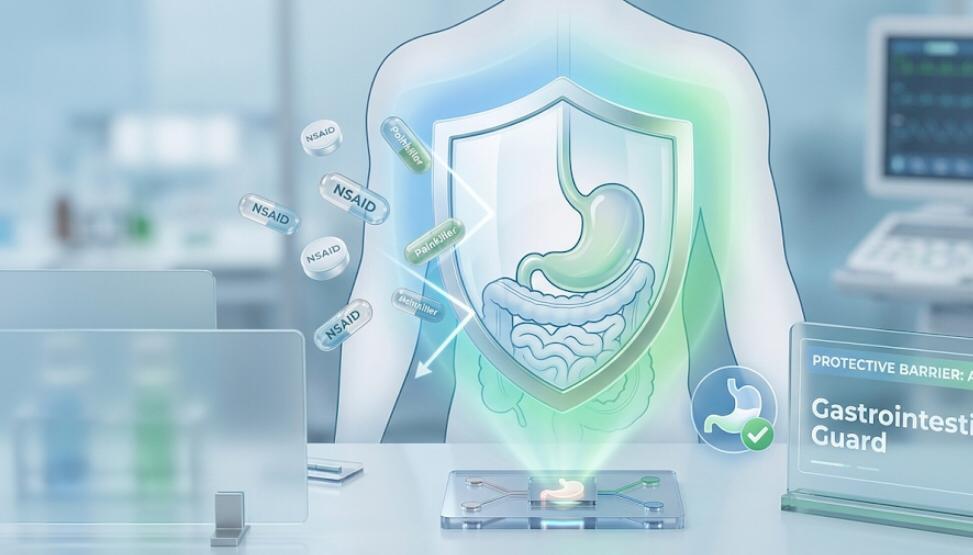
Protecting your stomach during NSAID therapy is essential for maintaining long-term gastrointestinal health and preventing mucosal damage.Nonsteroidal anti-inflammatory drugs (NSAIDs) remain among the most widely prescribed and over-the-counter analgesics globally, offering effective relief for millions suffering from acute musculoskeletal injuries, osteoarthritis, rheumatoid arthritis, and chronic inflammatory conditions.
However, as clinical practice evolves in 2026, gastroenterologists and pain management specialists emphasize that effective pain control cannot be separated from proactive gastrointestinal protection. NSAID-induced gastropathy accounts for tens of thousands of preventable hospitalizations annually, making mucosal safety an essential pillar of modern pharmacotherapy.
The Physiological Mechanism of Gastrointestinal Damage
To understand why NSAIDs pose a threat to upper gastrointestinal tract integrity, one must look at the biochemical cascades involved in inflammation and mucosal defense. Nonselective NSAIDs act by non-selectively inhibiting cyclooxygenase enzymes specifically COX-1 and COX-2. While COX-2 inhibition yields the desired therapeutic blockade of inflammatory prostaglandins (prostaglandin E2 and prostacyclin) at sites of tissue injury, systemic COX-1 inhibition disrupts essential physiological housekeeping functions throughout the digestive tract.
COX-1 vs. COX-2 Pathways in Gastric Homeostasis
In my clinical practice over the past decade, I have reviewed countless endoscopic evaluations where patients presented with diffuse gastric erosions merely weeks after initiating unbuffered NSAID regimens. COX-1 expression within gastric epithelial cells drives the continuous synthesis of cytoprotective mucus and bicarbonate ion secretion. Bicarbonate creates a crucial alkaline microclimate at the luminal surface, neutralizing gastric acid. Furthermore, COX-1 derived prostaglandins maintain mucosal blood flow, which delivers oxygen and nutrient substrates necessary for cellular regeneration while removing diffusing hydrogen ions.
Primary Mucosal Injury Cascade

When COX-1 activity is suppressed, a dual-phase injury occurs:
- Topical Injury Phase: Direct lipophilic contact of un-ionized NSAID molecules damages the hydrophobic phospholipid bilayer of surface epithelial cells.
- Systemic Ischemic Phase: Prostaglandin depletion severely reduces mucus-bicarbonate synthesis and impairs microvascular blood flow. This systemic ischemia compromises the gastric mucosal barrier, rendering underlying tissues vulnerable to enzymatic degradation by pepsin and hydrochloric acid.
Not all patients taking NSAIDs develop clinically significant gastroduodenal lesions; however, systematic risk stratification is vital prior to initiating chronic therapy. Evaluating personal risk factors allows clinicians to tailor effective co-therapies or transition patients toward safer pharmacological pathways.
High-Risk Clinical Cohorts
Epidemiological data from 2026 clearly delineates several patient populations that require mandatory, co-prescribed gastroprotection alongside any short- or long-term NSAID course:
- Advanced Age (>65 years): Natural age-related decline in gastric mucosal blood flow and diminished mucosal regenerative capacity.
- History of Peptic Ulcer Disease (PUD): Prior ulceration or upper gastrointestinal bleeding increases recurrence risks up to fourfold.
- Concomitant Medication Use: Simultaneous administration of systemic corticosteroids, anticoagulants (e.g., warfarin, direct oral anticoagulants), antiplatelet therapy (low-dose aspirin, clopidogrel), or selective serotonin reuptake inhibitors (SSRIs).
- High-Dose or Multiple NSAID Regimens: Combining over-the-counter NSAIDs (ibuprofen, naproxen) with prescription agents, or exceeding standard maximal daily thresholds.
Patient Risk Stratification Matrix
| Risk Category | Clinical Criteria | Recommended Gastroprotective Strategy |
|---|---|---|
| Low Risk | Younger age (<65), no prior ulcer history, single NSAID at lowest dose, no co-medications. | Monitor symptoms; gastroprotective agent optional unless treatment extended beyond 14 days. |
| Moderate Risk | Age >65 OR single risk factor (e.g., high-dose NSAID, corticosteroid use). | Co-prescribe a standard daily dose Proton Pump Inhibitor (PPI) or H2RA. |
| High Risk | History of complicated ulcer OR multiple risk factors present. | Use COX-2 selective inhibitor combined with high-efficacy PPI or consider non-NSAID alternatives. |
Modern Pharmacological Interventions for Gastric Protection
Preventing mucosal disruption requires targeted suppressive or cytoprotective therapy. Modern gastroenterology utilizes several distinct drug classes, each acting through distinct physiological mechanisms to preserve upper digestive stability. When treating complex dental and orofacial pain with non-steroidal anti-inflammatory drugs (NSAIDs), protecting your gastrointestinal health is essential. If you are currently managing persistent symptoms and want to learn more about complex orofacial pain protocols, read our detailed overview where we discuss the 2026 clinical perspectives before adjusting your treatment.
Proton Pump Inhibitors (PPIs) and Gastroprotective Efficacy
Proton Pump Inhibitors represent the gold standard in reducing NSAID-associated peptic ulcer formation and promoting active mucosal healing. By covalently binding to the H+/K+-ATPase enzyme system on parietal cell luminal membranes, PPIs profoundly suppress both basal and stimulated gastric acid secretion. Maintaining gastric pH above 4.0 for prolonged intervals drastically lowers chemical aggression against compromised surface epithelium.
Comparative Modalities: PPIs vs. H2RAs vs. Cytoprotective Agents
While Histamine-2 receptor antagonists (H2RAs) such as famotidine offer transient acid reduction, long-term studies reveal superior outcomes with PPI co-therapy in preventing both gastric and duodenal ulcers. Cytoprotective agents like misoprostol directly replace endogenous prostaglandins, but dose-limiting side effects including abdominal cramping and diarrhea frequently impede long-term compliance.
Comparative Analysis of Gastroprotective Drug Classes
Drug Class |
Mechanism of Action | Ulcer Prevention Efficacy | Tolerability & Compliance |
|---|---|---|---|
| PPIs (e.g., Esomeprazole) | Inhibits H+/K+-ATPase proton pump; near-complete acid suppression. | High (90–95% protection for gastric & duodenal ulcers) | Excellent; minimal daily side effects. |
| H2 Blockers (e.g., Famotidine) | Competitive block of H2 receptors on parietal cells. | Moderate (Effective for duodenal, less for gastric) | Good; potential tolerance (tachyphylaxis) over time. |
| Prostaglandin Analog (Misoprostol) | Replaces mucosal prostaglandins; stimulates mucus/bicarbonate. | High (Direct cytoprotection) | Poor; high incidence of GI distress and diarrhea. |
Sourcing Pharmaceutical Protection Safely and Verifying Quality
In modern clinical management, securing reliable, high-grade mucosal protection is as critical as selecting the appropriate pain management regimen. For patients requiring robust, long-term acid suppression alongside NSAID intake, trusted formulations such as Inderal (Esomeprazole) or Nexium play a central role in mitigating severe upper gastrointestinal complications.
Patients frequently inquire about convenient sourcing routes, including how to buy Inderal online or order Nexium through digital pharmacy platforms. When opting to buy Inderal online or purchase Nexium, safety and pharmaceutical legitimacy must remain paramount. In my outpatient practice, I frequently counsel patients on avoiding unverified online sellers.
If you plan to get Inderal or acquire Nexium for gastric co-therapy, always ensure you acquire your prescription from accredited, licensed online pharmacy providers that require a valid medical prescription and offer verified batch traceability. Purchasing through legitimate digital health networks guarantees product authenticity, correct active pharmaceutical ingredient (API) concentration, and optimal bioavailability protecting your digestive health while maintaining necessary pain relief.
Clinical Case Studies and Practical Observations
Reflecting on clinical cases from my practice illustrates the profound real-world impact of proactive gastric protection. A memorable case involved a 58-year-old active marathon runner who presented with severe osteoarthritic knee pain. To maintain his training schedule, he began taking self-prescribed high-dose naproxen daily without gastroprotective buffering.
Case Retrospective: Chronic NSAID Use in Osteoarthritis
Within four weeks, the patient reported insidious epigastric burning, nocturnal nausea, and dark, tarry stools indicative of upper gastrointestinal bleeding. Subsequent esophagogastroduodenoscopy (EGD) revealed multiple superficial gastric antral erosions and a 6mm active ulceration near the prepyloric region. We immediately discontinued naproxen, initiated therapeutic acid suppression with esomeprazole, and transitioned his pain management to localized topical analgesics alongside physical therapy. Within six weeks, follow-up endoscopy confirmed complete mucosal healing, and the patient resumed activities without pain or GI distress.
Key Clinical Takeaways
This case underscores three critical lessons:
- Physical fitness does not confer immunity against NSAID-induced chemical gastropathy.
- Early symptoms like mild dyspepsia must never be ignored.
- Co-prescribing gastric protection from day one prevents unnecessary morbidity and hospitalizations.
Comprehensive Clinical FAQ Section
Q1: Can taking NSAIDs with food completely eliminate the risk of stomach ulcers?
No, taking NSAIDs with food does not completely eliminate the risk of stomach ulcers because NSAID-induced damage is primarily driven by systemic COX-1 inhibition rather than direct surface contact alone. While taking medication alongside meals can reduce immediate local stomach irritation and mild dyspepsia, it does not stop the systemic reduction of cytoprotective prostaglandins that safeguard the stomach lining against acid.
Q2: How long can I safely take NSAIDs before requiring gastroprotective medication?
Gastroprotective medication is generally recommended if you plan to take daily NSAIDs for more than 7 to 14 consecutive days, particularly if you possess baseline gastrointestinal risk factors. For high-risk individuals such as adults over 65 or those with a history of ulcers gastroprotective co-therapy should begin on the very first day of NSAID treatment.
Q3: What are the early warning signs of NSAID-induced gastric bleeding?
Early warning signs of NSAID-induced gastric bleeding include persistent burning epigastric pain, unexplained nausea, vomiting material that resembles coffee grounds, dark or tarry stools (melena), and sudden lightheadedness or fatigue caused by anemia. If any of these red-flag symptoms occur, you should immediately cease NSAID intake and seek emergency medical evaluation.
Q4: Where can I buy Inderal online or safely order Nexium with a prescription?
You can safely buy Inderal online or order Nexium by utilizing accredited, state-licensed e-pharmacies that mandate a valid medical prescription and verify pharmaceutical supply chain authenticity. To secure a supply of genuine prescription Inderal or Nexium, always ensure the digital pharmacy displays official VIPPS (Verify Internet Pharmacy Practice Sites) or equivalent national regulatory certification before placing an order.
7. Authoritative Medical References
- Lanza, F. L., Chan, F. K., & Laine, L. (2009). Guidelines for Prevention of NSAID-Related Ulcer Complications. The American Journal of Gastroenterology, 104(3), 728–738.
- Sostres, C., Gargallo, C. J., & Lanas, A. (2014). Nonsteroidal anti-inflammatory drugs and upper gastrointestinal bleeding. Best Practice & Research Clinical Gastroenterology, 28(3), 417–431.
- World Health Organization (WHO). (2025). Model List of Essential Medicines: Gastrointestinal and Anti-inflammatory Safety Guidelines. Geneva: WHO Guidelines Approved by the Guidelines Review Committee.
- Mayo Clinic. (2026). NSAID Use and Gastric Health: Prevention Strategies for Peptic Ulcer Disease. Mayo Clinic Proceedings, Clinical Care Review.
- The Lancet Gastroenterology & Hepatology. (2025). Global burden of drug-induced mucosal injury and gastroprotection trends: A 2026 update. The Lancet, 10(2), 114–125.