Editorial disclosure: “Abraham Dental ART” is a dental laboratory name supplied for this article. Clinical scenarios below are illustrative composites, not records of identifiable patients. Material selection is a clinical decision made by a licensed dentist.
A crown either fits or it doesn’t. Patients notice the difference within seconds of the try in a high bite, a gray line at the gumline, a shade that looks right under the operatory light and wrong in daylight. What they rarely see is the chain of decisions behind that restoration: the preparation design, the scan or impression, the material choice, the ceramist’s layering, and the furnace cycle that either produced a strong crown or a fragile one.
Dental laboratory work sits in an unusual position. It is highly technical, largely invisible to the patient, and governed by a split responsibility. The dentist diagnoses, prepares the tooth, prescribes the restoration, and fits it. The dental laboratory fabricates it to that prescription. Neither can substitute for the other, and most restoration failures trace back to a breakdown in communication between the two.
This 2026 guide explains how modern dental ceramics are selected, how digital laboratory workflows have changed, what questions to ask before authorizing treatment, and how to compare laboratory-supported dental care without guessing.
A crown can match the shade tab and still look wrong next to a natural tooth. It can look right in a photograph and still need a bite adjustment. Those are different problems, and preventing them takes more than choosing a ceramic. It takes a dentist who defines the clinical needs and a dental laboratory that receives enough information to design and fabricate the restoration.
This guide is for Florida dental practices Abraham Dental Art and for patients who want to understand who makes their restorations. It explains what to include in a case inquiry, how common dental ceramics differ, and when an online pharmacy is relevant. Abraham Dental Art’s Florida address, dental laboratory registration, current service list, and any pharmacy affiliation have not been independently verified. The services below are options to ask about, not a confirmed catalog.
About Abraham Dental Art: A 2026 Florida Guide
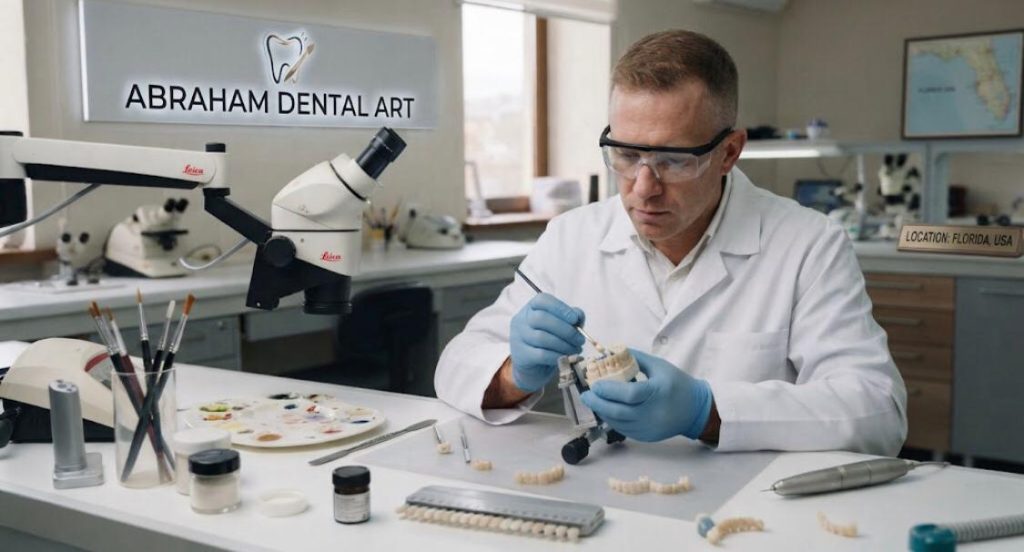
Abraham Dental Art laboratory translates a dentist’s work order into a custom restoration. Depending on the case, that may involve designing a crown from an intraoral scan, matching the appearance of a neighboring tooth, or fabricating a restoration that fits an implant component. The dentist remains responsible for diagnosing the problem, deciding whether a restoration is appropriate, and evaluating its fit and function in the mouth. The laboratory contributes technical judgment; it does not replace the treating dentist.
If you are considering Abraham Dental Art, start by asking for its registered business name, physical laboratory address, and Florida dental laboratory registration number, if it operates a laboratory in Florida. Search the Florida Department of Health’s license and registration lookup using the legal name or number, then check that the address and status match what you were given. A brand name, business directory listing, or corporate filing is not the same as dental laboratory registration.
Location can affect more than shipping. A practice that needs a shade consultation or a quick return for an adjustment should ask where cases are received, where they are fabricated, and which steps, if any, are sent to another facility. If patients ask who made their restoration, the dental office should be able to answer. Ask which contact handles a design question and which one handles a remake; they may not be the same person.
What patients can ask their dentist
If your dentist recommends a crown, ask why the tooth needs full coverage and whether a more conservative restoration would be appropriate. A crown covers the visible portion of a prepared tooth; an onlay covers a more limited area, including one or more cusps. The choice depends on what remains of the tooth and what the restoration needs to accomplish, not simply on which ceramics a laboratory can make. You can also ask which lab your dentist plans to use and what your estimate includes if an adjustment is needed.
Dental Laboratory Services: What to Confirm
For a single crown, ask which ceramic products the laboratory works with, whether it offers monolithic or layered designs, and what records it needs before it can accept the case. A monolithic restoration is made primarily from one ceramic body; a layered restoration adds a veneering ceramic to create optical effects or refine contours. For a veneer or partial-coverage restoration, the available space, remaining enamel, and adhesive plan influence what the team can reasonably make.
Not every attractive case photograph tells you something useful about your case. A gallery may show how a lab handles shade or texture, but it rarely shows how much room was available, what color lay beneath the ceramic, or why a particular material was chosen. Ask for examples that resemble the case you are sending. A single central incisor beside an untreated natural tooth presents a different challenge from a set of matching veneers.
Bridges and implant-supported restorations
A lab that fabricates single crowns may not accept every bridge span or implant system. For a bridge, confirm that the specific ceramic product supports the planned span and connector design. A material that works well for a single molar crown is not automatically appropriate for a multi-unit restoration. Resolve questions about available space and connector dimensions before finalizing the design, when the dentist and technician still have options.
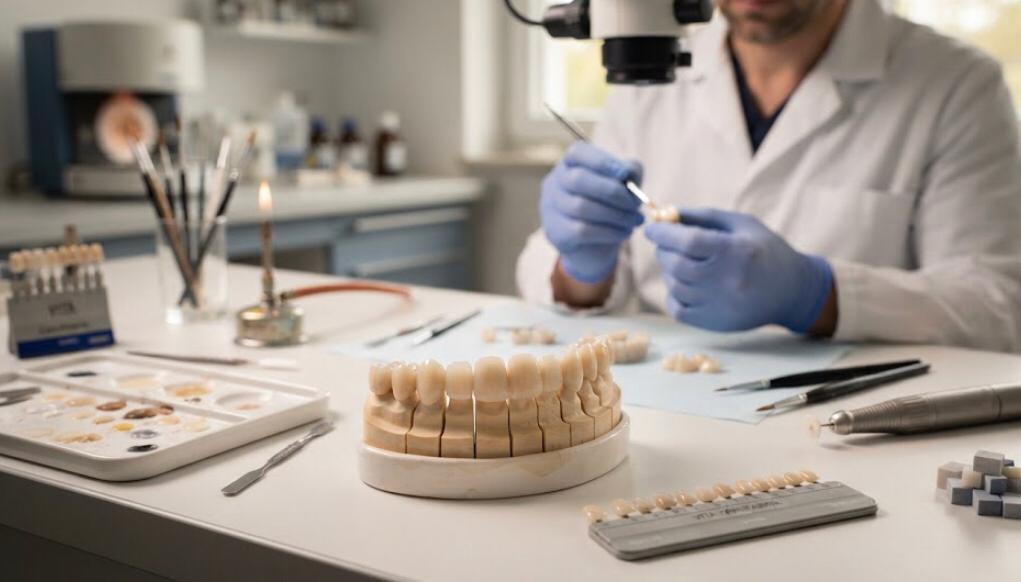
For an implant-supported crown, confirm the implant system, platform, scan body, and any proposed titanium-base component. Ask the lab how it verifies compatibility and documents the components used. For larger implant cases, ask what records or verification steps the lab requires before definitive fabrication. A lab’s ability to accept a digital file does not establish that the file contains everything it needs.
Digital files, shade records, and case review
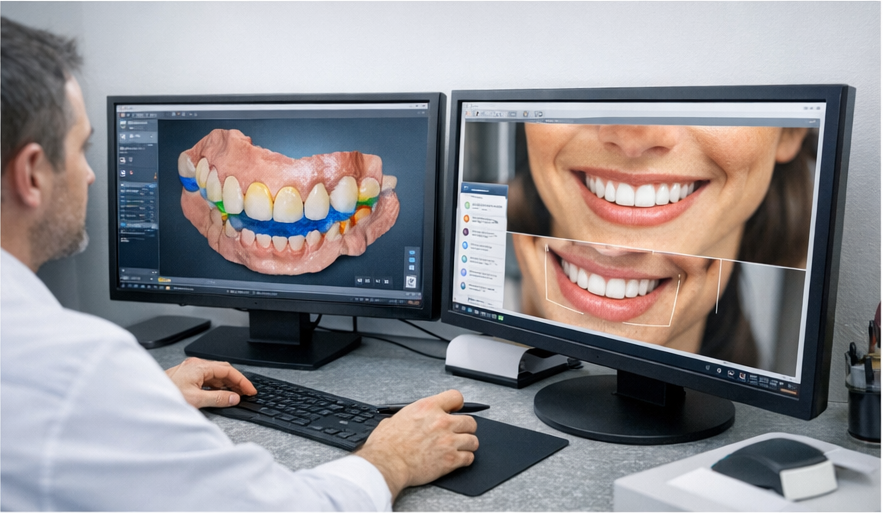
Ask how the lab receives intraoral scans, opposing-arch records, bite scans, and photographs. An STL file describes surface geometry; PLY or OBJ files may also carry color information, depending on the scan and export. On-screen color is not a substitute for a shade reference. For a front tooth, a well-exposed photo with a labeled shade tab and a photograph of the prepared tooth may be more useful than a shade code alone.
What belongs on a case-ready work order
- The restoration: Tooth or implant position, restoration type, and the material or material options to discuss.
- The records: Legible margins, the opposing arch, and a bite record that reflects the intended relationship.
- The appearance: Shade reference, photographs, prepared-tooth shade when relevant, and any shape or texture requests.
- The decisions that need approval: Whether the lab should pause for a design review, material substitution, or change in the delivery date.
Hypothetical case: One front crown, two color records
A dentist is replacing a front crown over a dark prepared tooth. The adjacent natural tooth is bright at the center but translucent at the edge. Sending only “A2” tells the technician what shade to aim for, but not what the ceramic must mask. A photo of the adjacent tooth with a shade tab sets the target; a second record of the prepared tooth shows what may show through. With both, the dentist and technician can discuss opacity and layering before fabrication instead of trying to solve a masking problem at delivery.
Dental Ceramics: Zirconia, Lithium Disilicate, and Porcelain
The best choice is not always the strongest material on a specification sheet. The dentist and technician have to balance chewing forces, thickness, the color underneath the restoration, and how it will be retained. Differences between ceramic classes matter, but so do differences between individual products within a class.
| Ceramic option | Where it may fit | What the dentist and lab should confirm |
|---|---|---|
| Zirconia | Single crowns and selected bridges; some products can help mask a dark underlying tooth | The exact product, its translucency and strength trade-offs, permitted span, and minimum dimensions |
| Lithium disilicate | Selected crowns, veneers, inlays, and onlays where appearance and adhesive placement matter | Available space, underlying tooth color, and the product-specific bonding plan |
| Feldspathic porcelain | Selected conservative veneers or layering where fine control of color and translucency is needed | Remaining enamel, support for the ceramic, and whether the design suits the patient’s bite |
Why “zirconia” is not a complete material order
Zirconia products vary. A more translucent formulation may suit an anterior case, while a different formulation may better meet the demands of a posterior crown or bridge. Those are case decisions, not rules for every front or back tooth. If the laboratory proposes a substitution, ask for the exact product and the reason for the change before approving it. A substitution can change the appearance, the amount of space needed, or whether the product is indicated for the restoration.
Why finishing and fit matter after fabrication
A crown can sit on a model and still need evaluation in the mouth. At delivery, the dentist checks the margins, neighboring contacts, bite, and appearance before placement. If ceramic is adjusted, the surface should be refinished using the protocol for that material. The placement plan should also be clear before the case leaves the laboratory. Glass ceramics and zirconia do not share the same surface-conditioning requirements. Ask how the lab identifies the product and communicates any treatment already performed on the internal surface. That information helps the dentist follow the current instructions for the specific ceramic and cement system.
Request a Dental Laboratory Quote from Abraham Dental Art
For dental practices, start with one defined case. Use a confirmed business contact to ask whether the lab accepts the restoration you are planning. Request a written quote that identifies the proposed material, what is included in the fee, and when the turnaround clock starts. A quote for a single zirconia crown may not include a custom shade appointment, rush handling, or additional design review. If you are comparing labs, compare what each quote actually covers.
Review any available products page, case gallery, or blog before ordering, then ask how those examples relate to your prescription. If your practice needs to secure a reliable supply of compatible implant components, request the manufacturer and product identifiers and ask how the lab handles traceability. For manufacturers subject to the rule, the FDA’s updated Quality Management System Regulation has an effective date of February 2, 2026. That rule is separate from Florida dental laboratory registration. It does not establish that a particular lab is certified or that a specific product is appropriate for your case.
Before sending identifiable patient records, confirm the laboratory’s secure submission channel and who can answer clinical design questions. Ask for its adjustment and remake terms in writing. For a first case, note whether the lab raised missing information before fabrication, how many chairside adjustments were needed, and whether the return date allowed time for review. Those observations are more useful when deciding whether to send a second case than a promise of “high precision” on a service page.
Online Pharmacy Safety for Florida Dental Patients
How to verify online pharmacy
A dental laboratory and online pharmacy serve different purposes. A dental laboratory work order authorizes fabrication of a restoration. It does not authorize dispensing medication. If your dentist prescribes a medication, fill that separate prescription through a pharmacy authorized to dispense to patients in Florida. This guide does not represent Abraham Dental Art as a pharmacy or a medication seller.
Check the pharmacy’s legal name and license or permit through the Florida Department of Health lookup. If the pharmacy is based outside Florida, confirm that it is authorized to dispense to Florida patients. Match the pharmacy’s website, address, and telephone number to the verified business rather than relying on a logo or an accreditation badge shown at checkout.
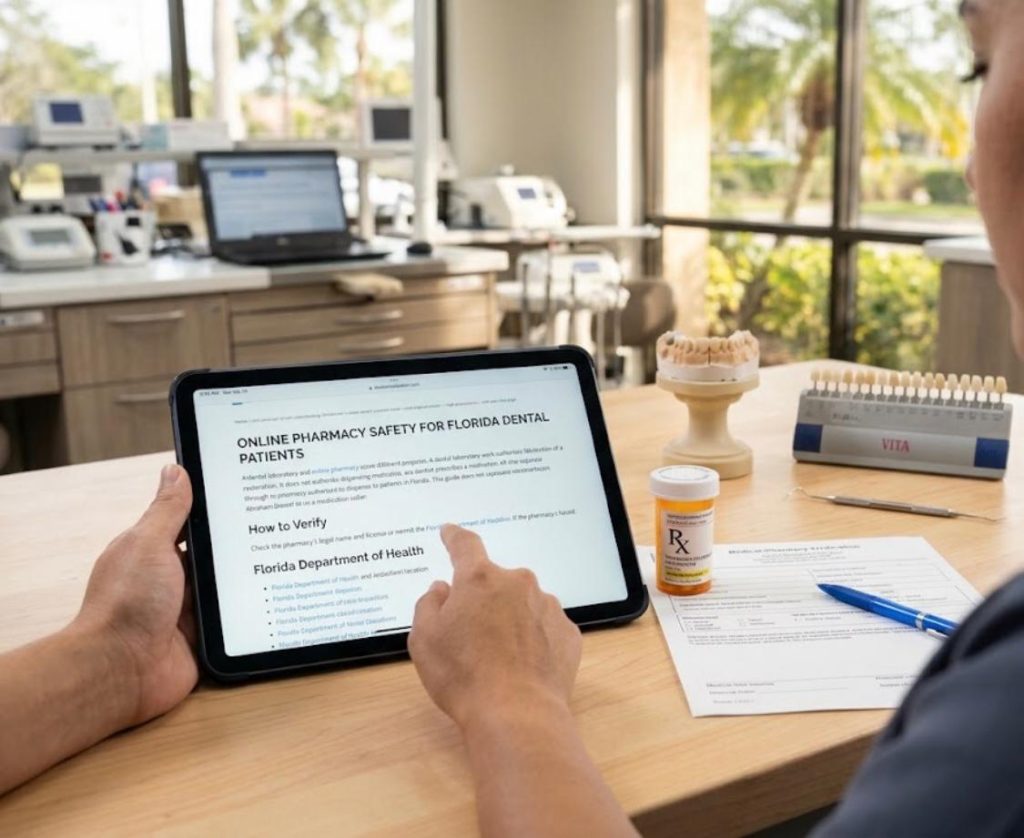
The FDA recommends using an online pharmacy that requires a valid prescription for prescription drugs, provides a physical U.S. address, and gives patients access to a licensed pharmacist.[6] Ask about the total price and delivery timing before you transfer a prescription. Avoid sellers that offer prescription medication without a prescription or will not tell you where the medicine is dispensed.
When to call the dentist instead of ordering medication
If a new crown feels high, your tooth hurts when you bite, or a temporary restoration comes loose, contact the treating dentist. Medication cannot fix a bite or reseat a restoration. Worsening facial swelling or fever needs prompt assessment. If swelling makes breathing or swallowing difficult, call 911 rather than waiting for an online consultation or delivery.
Frequently Asked Questions
Is Abraham Dental Art registered as a dental laboratory in Florida?
Abraham Dental Art’s Florida dental laboratory registration has not been verified for this guide. Request its registered name and registration number, then check both through the Florida Department of Health.
What is the difference between zirconia and lithium disilicate?
Zirconia is a polycrystalline ceramic, while lithium disilicate is a glass ceramic. The dentist and technician choose a specific product based on the restoration’s design, appearance goals, available space, and placement plan.
How can my practice request a dental ceramics quote from Abraham Dental Art?
Use the laboratory’s confirmed business contact to request a written quote for the specific restoration. Ask which materials and files it accepts, what the fee includes, and how it handles turnaround and remakes.
Can I order a custom crown directly from a dental laboratory?
Start with your treating dentist, not a direct laboratory order. The dentist determines whether you need a crown, authorizes fabrication, and checks the fit and bite before placement.
Can I fill a dental prescription through an online pharmacy in Florida?
Yes, if you have a valid prescription and the pharmacy is authorized to dispense to patients in Florida. Verify the pharmacy’s status and confirm that you can speak with a licensed pharmacist.