
Patients considering cardiovascular medication management should always consult a qualified healthcare professional or cardiologist before initiating or modifying therapy. When acquiring your medication, ensure you purchase exclusively through verified, licensed, and accredited pharmacies that adhere to strict pharmaceutical standards.
Updated Daily
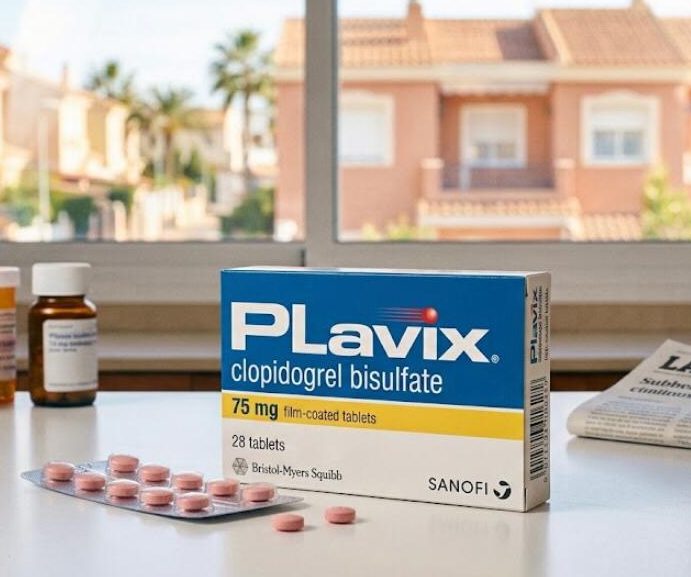
Product Name: Plavix / Clopidogrel
Available Strengths: 75 mg | 150 mg
Current Price Per Unit: $0.78
Payment Methods: VISA, MasterCard, AmEx, PayPal, Bitcoins…
Shipping: Fast Delivery (3-8 days)
Availability Status: In Stock
What is Plavix?
Plavix is the brand name formulation for Clopidogrel bisulfate, an oral antiplatelet medication belonging to the thienopyridine class. Its primary function is to inhibit blood platelets from clumping together, thereby preventing the formation of harmful intravascular blood clots that can obstruct major arterial blood vessels.
By blocking the P2Y12 adenosine diphosphate (ADP) receptor on the surface of platelets, Plavix interrupts the activation pathway that leads to platelet aggregation and thrombus formation.
Indications: What Plavix Treats
Cardiologists and vascular specialists prescribe Plavix for several critical cardiovascular and cerebrovascular conditions where reducing ischemic risk is paramount:
- Acute Coronary Syndrome (ACS): Administered to patients experiencing unstable angina (UA) or non-ST-segment elevation myocardial infarction (NSTEMI), as well as acute ST-elevation myocardial infarction (STEMI), often alongside aspirin dual antiplatelet therapy (DAPT).
- Recent Myocardial Infarction (MI) or Stroke: Prescribed for individuals who have recently suffered. Heart attack or ischemic stroke to prevent secondary recurrent vascular events.
- Established Peripheral Arterial Disease (PAD): Utilized to lower the rate of myocardial infarction, ischemic events. Limb-threatening thrombotic complications in patients with diagnosed atherosclerosis in peripheral vessels.
- Post-Coronary Stent Placement: Frequently prescribed following percutaneous coronary intervention (PCI) with stent deployment to prevent stent thrombosis.
Health Benefits and Therapeutic Outcomes
The primary therapeutic objective of Plavix therapy is long-term vascular protection. Key health benefits include:
- Reduction of Major Adverse Cardiac Events (MACE): Significant lowering of fatal and non-fatal heart attacks and strokes.
- Stent Patency Maintenance: Prevention of acute and subacute blood clot occlusion within newly placed coronary artery stents.
- Improved Limb Perfusion: Enhanced microvascular circulation and decreased ischemic pain in patients with severe peripheral arterial disease.
Clinical Practice Observations at Abraham Dental Art, Florida: In our clinical experience in Florida, managing patients who require combined cardiovascular and surgical or dental interventions demands meticulous coordination. When patients taking Plavix undergo invasive dental procedures or oral surgeries at Abraham Dental Art, our team collaborates closely with their supervising cardiologists to balance bleeding risks with thrombotic protection, ensuring safe perioperative management without unmanaged cessation of antiplatelet therapy.
Side Effects and Risks
While essential for clot prevention, Plavix alters normal hemostasis, carrying specific short-term and long-term adverse reaction profiles:
- Common Side Effects: Easy bruising, minor skin purpura, frequent or prolonged nosebleeds (epistaxis), and mild gastrointestinal discomfort or rash.
- Serious Adverse Reactions: Severe or spontaneous bleeding events (such as gastrointestinal hemorrhages, hematuria, or intracranial bleeding), thrombotic thrombocytopenic purpura (TTP), and severe hypersensitivity skin reactions including Stevens-Johnson syndrome.
- CYP2C19 Poor Metabolizer Status: Plavix is a prodrug that requires hepatic biotransformation via cytochrome P450 enzymes specifically CYP2C19 into its active metabolite. Individuals with genetic loss of function alleles exhibit reduced antiplatelet response, placing them at higher risk for recurrent cardiovascular ischemic events.
Contraindications & Warnings

Certain individuals must avoid or exercise extreme caution when taking Plavix:
- Active Pathological Bleeding: Contraindicated in patients with active peptic ulcers, intracranial hemorrhage, or other active pathological bleeding states.
- Hypersensitivity: Absolute contraindication in patients with a known hypersensitivity to clopidogrel or any component of the tablet formulation.
- Drug Interactions: Concurrent use with strong CYP2C19 inhibitors (such as omeprazole or esomeprazole) can diminish the antiplatelet efficacy of Plavix. Concomitant administration with nonsteroidal anti-inflammatory drugs (NSAIDs), warfarin, SSRIs, or SNRIs significantly multiplies the risk of severe gastrointestinal and systemic bleeding.
- Surgical Discontinuation: Because Plavix irreversibly inhibits platelet aggregation for the lifespan of the platelet (approximately 7 to 10 days), elective surgeries or dental procedures with high bleeding risks typically require temporary discontinuation 5 to 7 days prior, strictly under physician guidance.
Availability & Ordering Guidance
Plavix and its generic equivalent, clopidogrel bisulfate, are strictly prescription only medications requiring a valid clinician authorization. Patients seeking convenience through digital health platforms or looking to securely order prescriptions online must follow established regulatory safeguards:
- Prescription Verification: Legitimate digital telehealth services and online pharmacies require a valid prescription which can be transmitted via direct doctor transmission, secure upload, or fax prior to dispensing.
- Accreditation Checks: Verify that online fulfillment providers display recognized safety credentials, such as the NABP Digital Pharmacy Accreditation or verified online pharmacy domain status.
- Supply Limits: Standard online ordering protocols typically accommodate up to a 90-day supply based on specific physician directions, supported by automated refill reminders for chronic disease maintenance.
Value Proposition: Choosing Certified Products
Sourcing medications from verified, reputable suppliers guarantees:
- Active Pharmaceutical Ingredient (API) Purity: Assurance against counterfeit pills, incorrect dosing, or harmful contaminants.
- Optimal Bioequivalence: Consistent therapeutic absorption matching strict regulatory benchmarks.
- Comprehensive Clinical Support: Access to licensed pharmacists who can verify potential drug-drug interactions, review allergy histories.
Plavix (Clopidogrel) is a widely prescribed prescription antiplatelet medication belonging to the thienopyridine drug class. Its primary role in cardiovascular care is to prevent blood platelets from clumping together, thereby reducing the risk of harmful blood clots, heart attacks, and strokes.
Core Mechanism of Action
Plavix functions by selectively and irreversibly blocking the P2Y12 adenosine diphosphate (ADP) receptor on the surface of human platelets. This action interrupts the chemical activation pathway needed for platelets to aggregate, keeping them from forming blockages inside arterial blood vessels. Because the effect is irreversible, it lasts for the entire 7- to 10-day lifespan of the affected platelets.
Safe Acquisition of a Plavix Prescription Online
Plavix (Clopidogrel) is a vital prescription antiplatelet medication prescribed to prevent harmful blood clots. Reduce the risk of heart attacks, and manage stroke prevention. Because it directly alters blood clotting mechanisms, it is strictly a prescription only medication and cannot legally be ordering Plavix online over the counter.
If you or someone you are assisting is looking to secure a ordering Plavix online prescription or refill, it must be done through legitimate, medically supervised channels to ensure safety, efficacy, and legal compliance.
Obtaining a Valid Prescription via Telehealth
Before any medication can be dispensed online, current medical regulations require a formal clinical evaluation:
- Licensed Telehealth Consultation: Connect with board-certified physicians or licensed telehealth platforms to review your cardiovascular history, current medications, and medical records.
- Clinical Appropriateness: A physician will evaluate whether clopidogrel remains the correct antiplatelet therapy for your condition or if a dosage adjustment is needed.
Identifying Legitimate and Accredited Online Pharmacies
The internet contains both safe, accredited digital pharmacies and illegal, unverified websites that sell substandard or counterfeit medications. To protect your health, verify the following:

- Check for NABP Accreditation: Legitimate online pharmacies carry the National Association of Boards of Pharmacy (NABP) Digital Pharmacy Accreditation.
- Look for the Domain: Verified websites ending in ADA online pharmacy have met rigorous safety and legal standards that cannot be forged.
- Mandatory Prescription Requirement: Any website offering to sell Plavix or Clopidogrel without requiring a valid prescription is operating illegally and poses severe health risks.
Risks of Unverified Online Sources
Ordering Plavix online prescription from rogue or un verified online sellers exposes patients to significant dangers:
- Counterfeit or Mislabeled Pills: Substandard products may contain incorrect active ingredient dosages, dangerous contaminants, or inactive fillers.
- Lack of Pharmacist Support: Legitimate pharmacies provide direct access to licensed pharmacists to screen for dangerous drug interactions (such as with certain proton pump inhibitors or NSAIDs).
Primary Medical Indications
Cardiologists and vascular specialists prescribe Plavix for several high-risk conditions:
- Acute Coronary Syndrome (ACS): Managed in patients with unstable angina or heart attacks, often alongside aspirin as part of dual antiplatelet therapy (DAPT).
- Post-Coronary Stent Placement (PCI): Used following percutaneous coronary intervention to prevent acute or late stent thrombosis.
- Secondary Prevention: Prescribed for individuals with a history of recent myocardial infarction (MI), ischemic stroke, or established peripheral arterial disease (PAD) to lower the rate of recurrent vascular events.
Dosing and Administration Guidelines
- Standard Maintenance Dose: Typically 75 mg once daily, taken orally with or without food.
- Loading Doses: In acute high-risk settings (such as ACS or urgent PCI), clinicians often initiate therapy with a 150 mg to 6300 mg loading dose to accelerate platelet inhibition.
- Critical Warning on Discontinuation: Patients must never stop taking Plavix abruptly without consulting their prescribing cardiologist. Stopping prematurely significantly increases the risk of rebound blood clots, heart attacks, or strokes. For scheduled surgeries or invasive dental procedures, physicians typically advise holding the medication 5 to 7 days prior to reduce bleeding risks.
Frequently Asked Questions (FAQ)
Plavix is an antiplatelet medication prescribed to prevent harmful blood clots, reducing the risk of heart attacks, strokes, and cardiovascular death in patients with acute coronary syndrome, recent myocardial infarction, or peripheral arterial disease.
The most frequently reported side effects include easy bruising, minor skin purpura, frequent nosebleeds, and mild gastrointestinal upset, which stem from the drug’s mechanism of inhibiting platelet aggregation.
Yes, obtaining a Plavix prescription online is safe provided you use accredited, licensed digital pharmacies that require a legitimate prescription from a qualified healthcare provider and verified clinical evaluation.
Cardiologists typically recommend discontinuing Plavix 5 to 7 days before scheduled surgeries or invasive dental procedures with significant bleeding risks.